Aaron Anderson
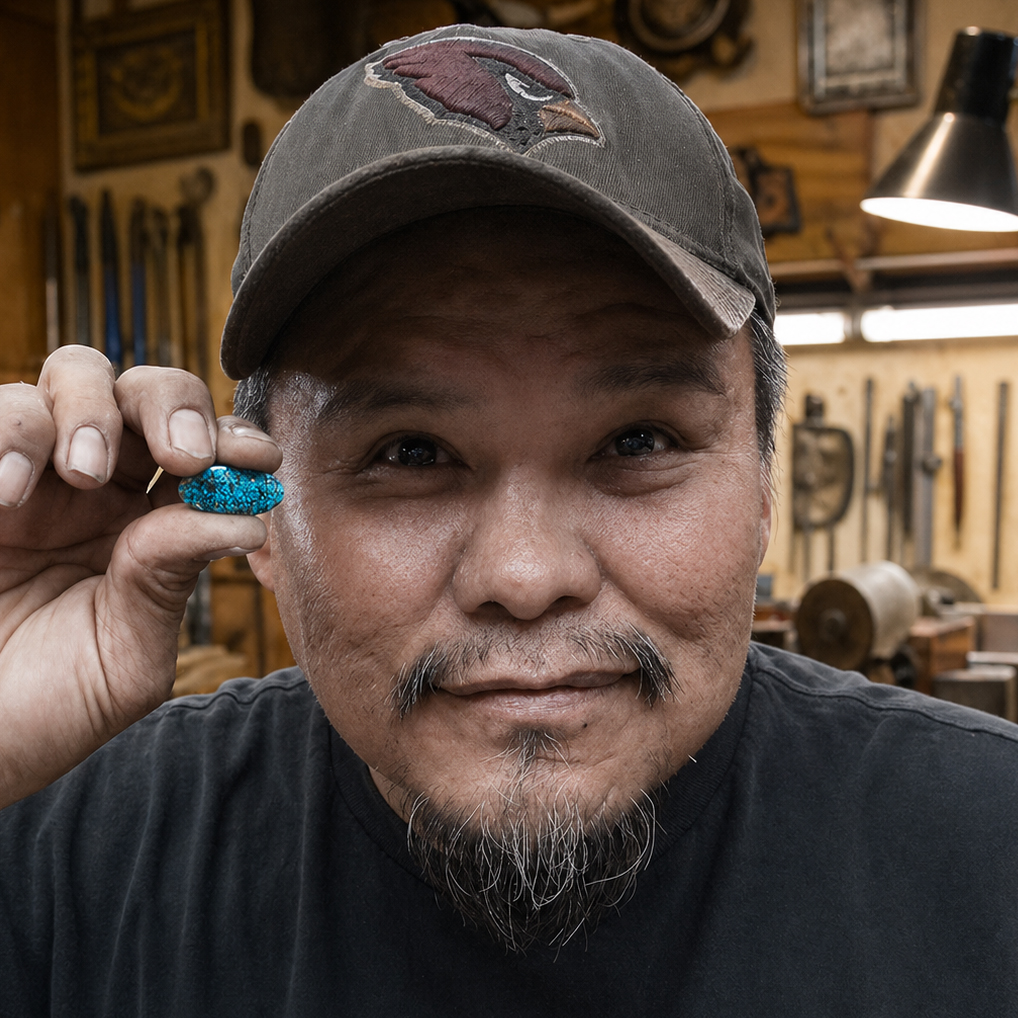
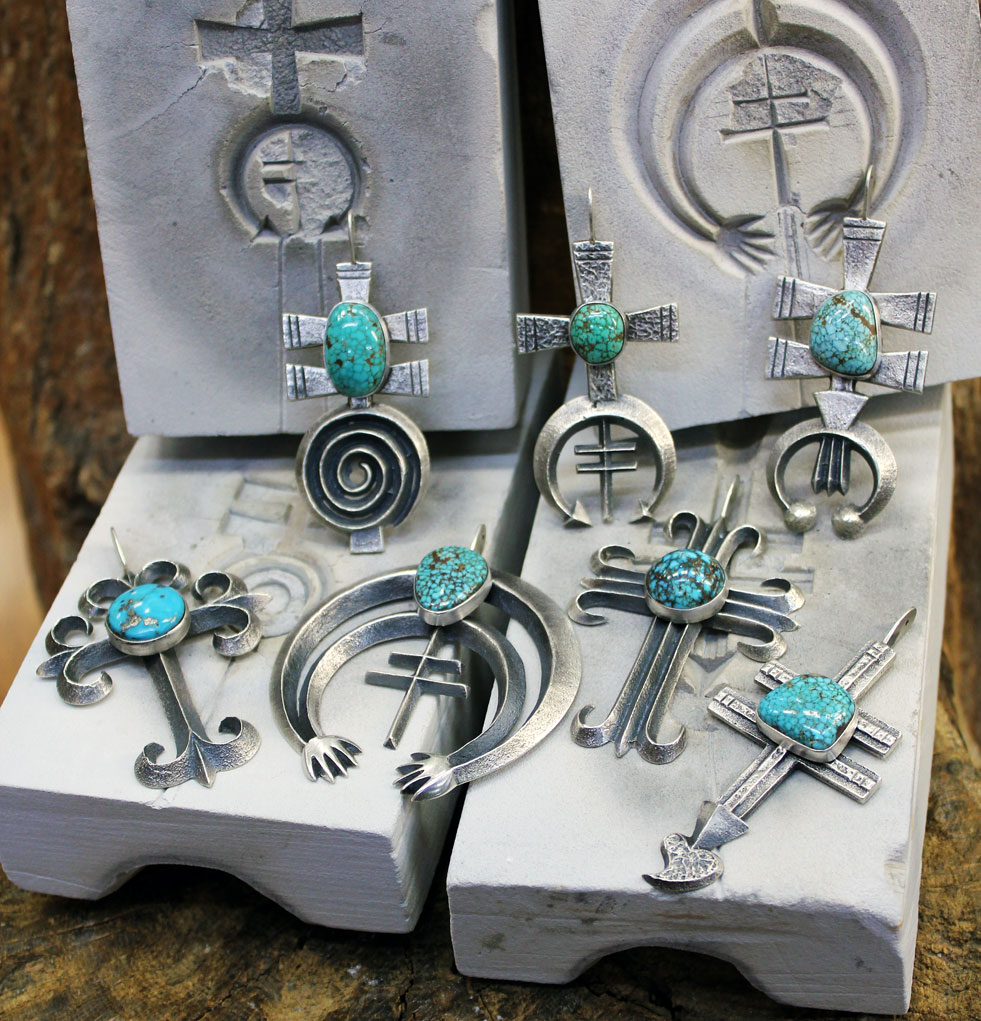
Aaron Anderson is a Navajo silversmith whose influence can be seen across an entire generation of tufa cast artists. Known for his willingness to share knowledge, Aaron built not only a body of work, but a legacy that extends far beyond his own bench. Many artists who practice tufa casting today have, in some way, been shaped by his guidance.
Interview with the Artist
Daisy Cowboy (DC) – How did you get started in jewelry making?
Aaron Anderson (AA) – I learned from Wilfred Henry. That’s where it all started for me.
Aaron carries on a tradition that was passed down to him by his late stepfather, Wilfred Henry. Along with that knowledge, he also inherited Henry’s original templates—designs that helped shape Aaron’s early work and continue to influence his style today.
DC – Your work is often associated with tufa casting. Did you always work that way?
AA – I started with traditional sandcasting, but I moved into tufa casting. I liked carving my own designs into the stone.
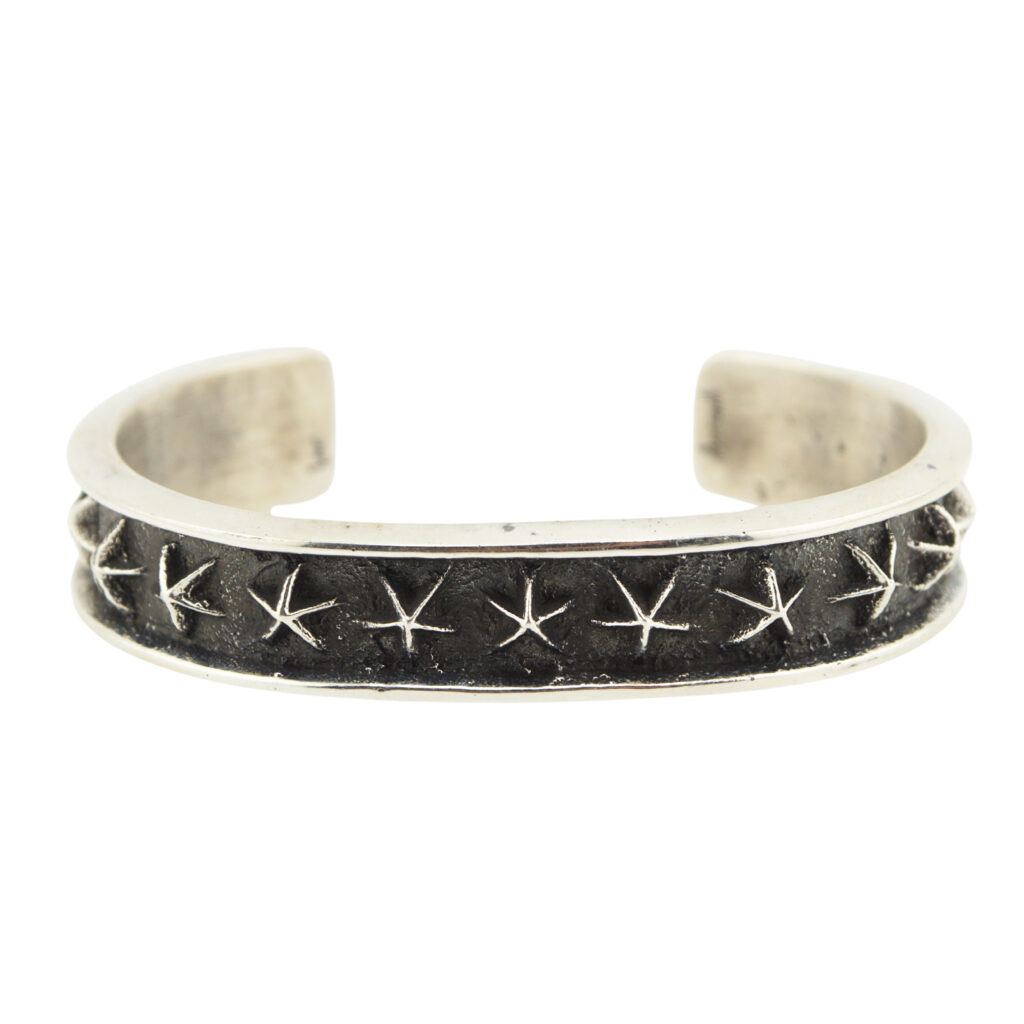
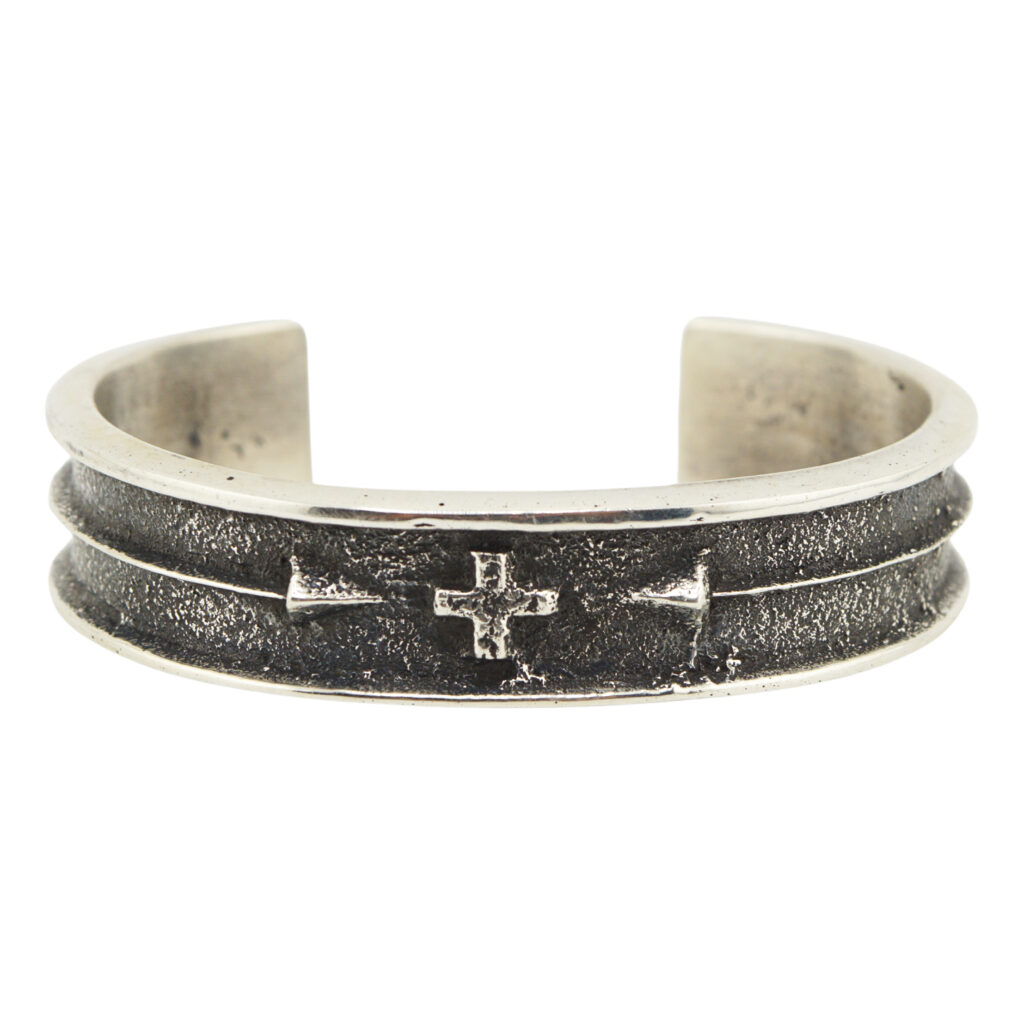
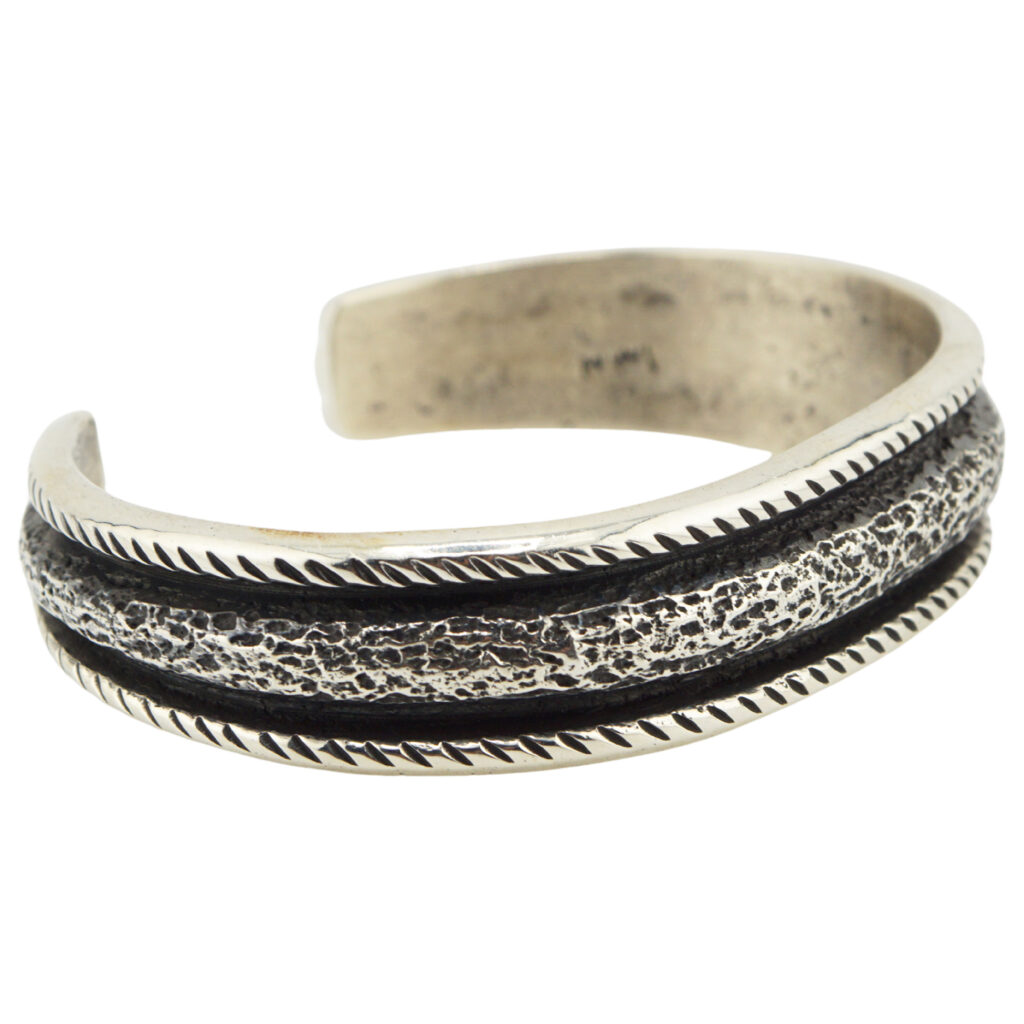
While many traditional Navajo silversmiths rely on sandcasting, Aaron took a different path. Tufa casting allowed him to carve directly into the stone, giving him more control over texture and design. That approach gave his work a distinct look—one that feels both organic and deliberate.
DC – A lot of younger artists have a similar style today. What do you think about that?
AA – I’ve always been open to showing people how I do things. If someone wants to learn, I’ll help them.
That openness is a big part of Aaron Anderson’s legacy. His shop became a place where artists could come, learn, and develop their own skills. While many have adopted elements of his style, his work remains instantly recognizable.
DC – Even with all those influences out there, your work still stands apart. Why do you think that is?
AA – Everyone does things a little different. You just keep working at it.
There’s something about Aaron Anderson’s pieces that sets them apart. The depth of the carving, the balance of the design, and the overall feel of the work make it clear when you’re looking at one of his creations.
DC – You never really focused on the big shows. Was that a choice?
AA – I just liked working. That was enough for me.
Unlike many well-known artists, Aaron didn’t spend much time on the show circuit. He focused instead on the work itself—creating pieces and sharing his knowledge with others.
While he may not have reached the same level of public recognition as some of his contemporaries, his impact is undeniable. As this era of Navajo silversmithing is studied in the future, Aaron Anderson’s contributions to tufa casting and his role in mentoring other artists will likely stand out as an important part of that history.