Daisy Cowboy (DC): Do you have a favorite piece you’ve made?
Melvin Francis (MF): I’ve always enjoyed the collaboration pieces I’ve done with Eugene Mitchell. The heavy silver channel inlay designs really stand out once the inlay is complete—they just look solid and sharp.
DC: What kind of style did your dad work in?
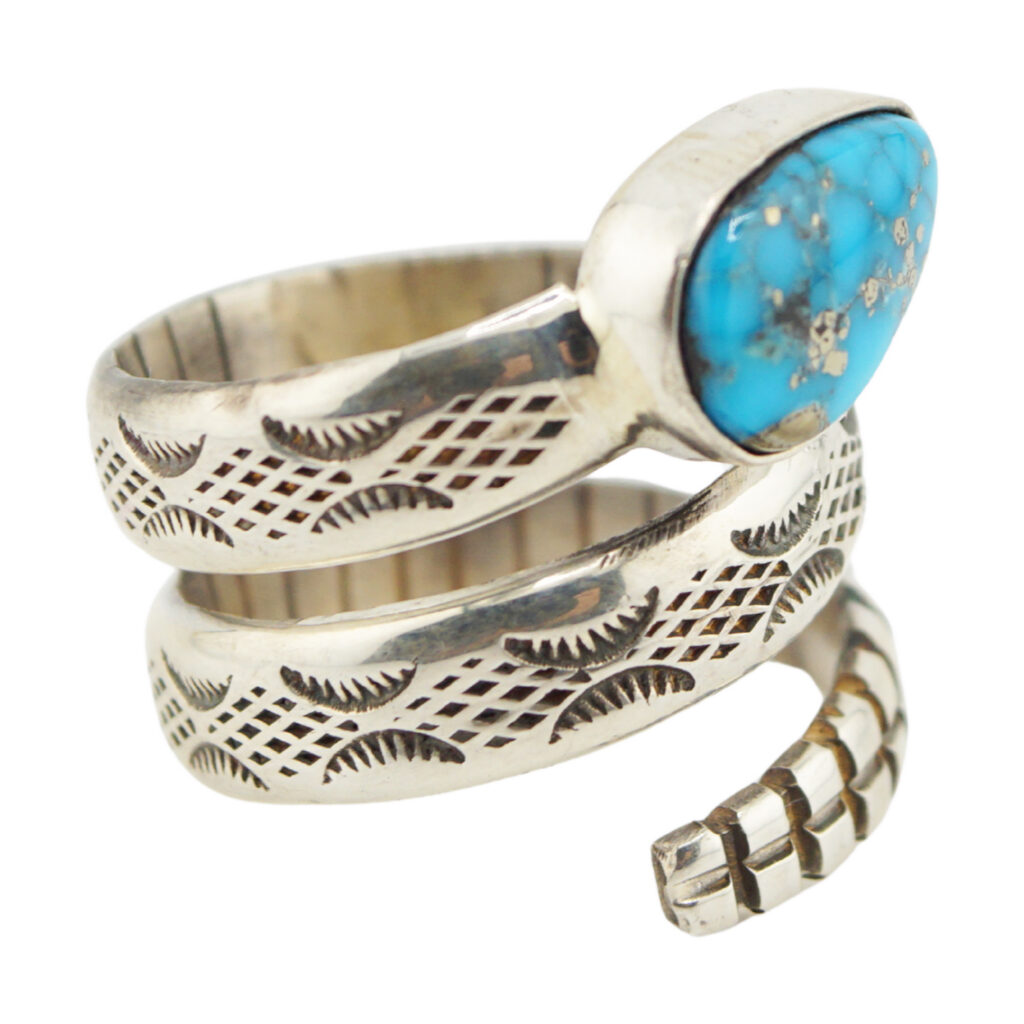
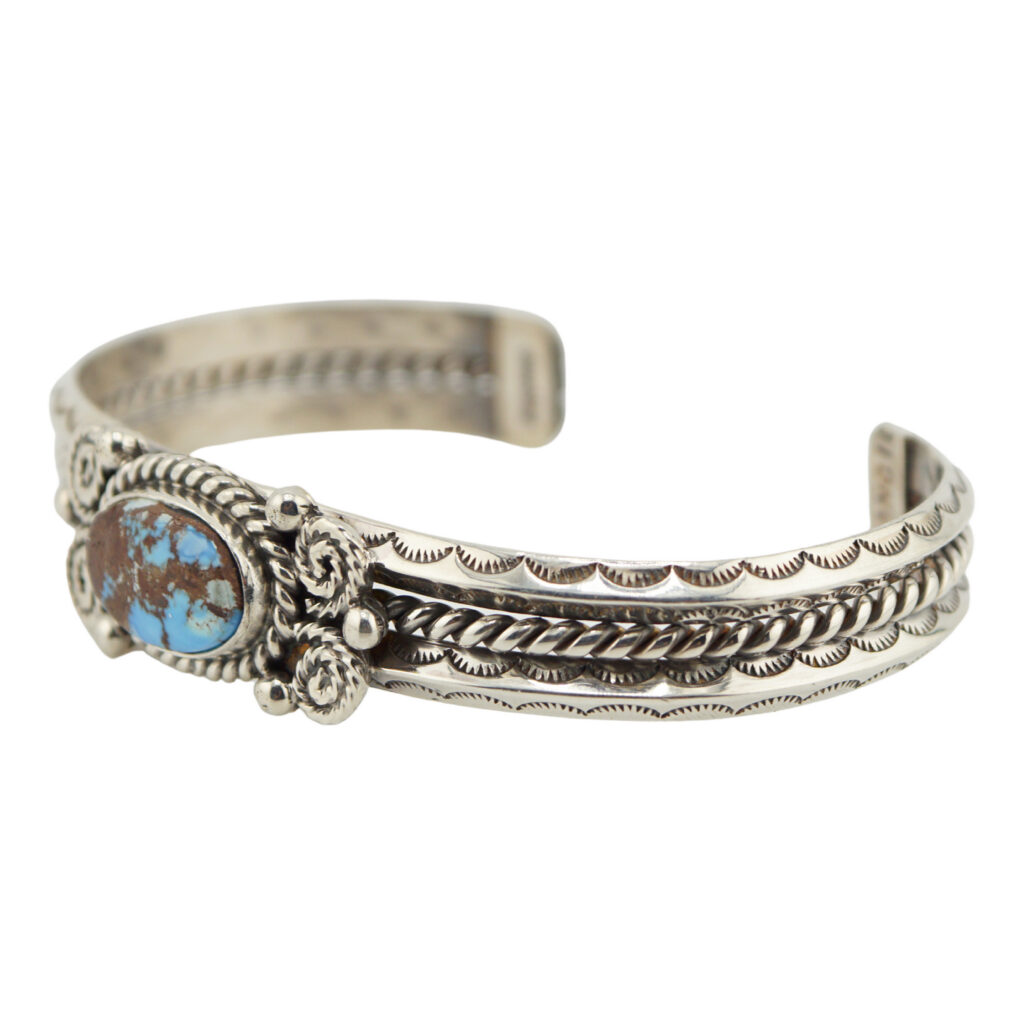
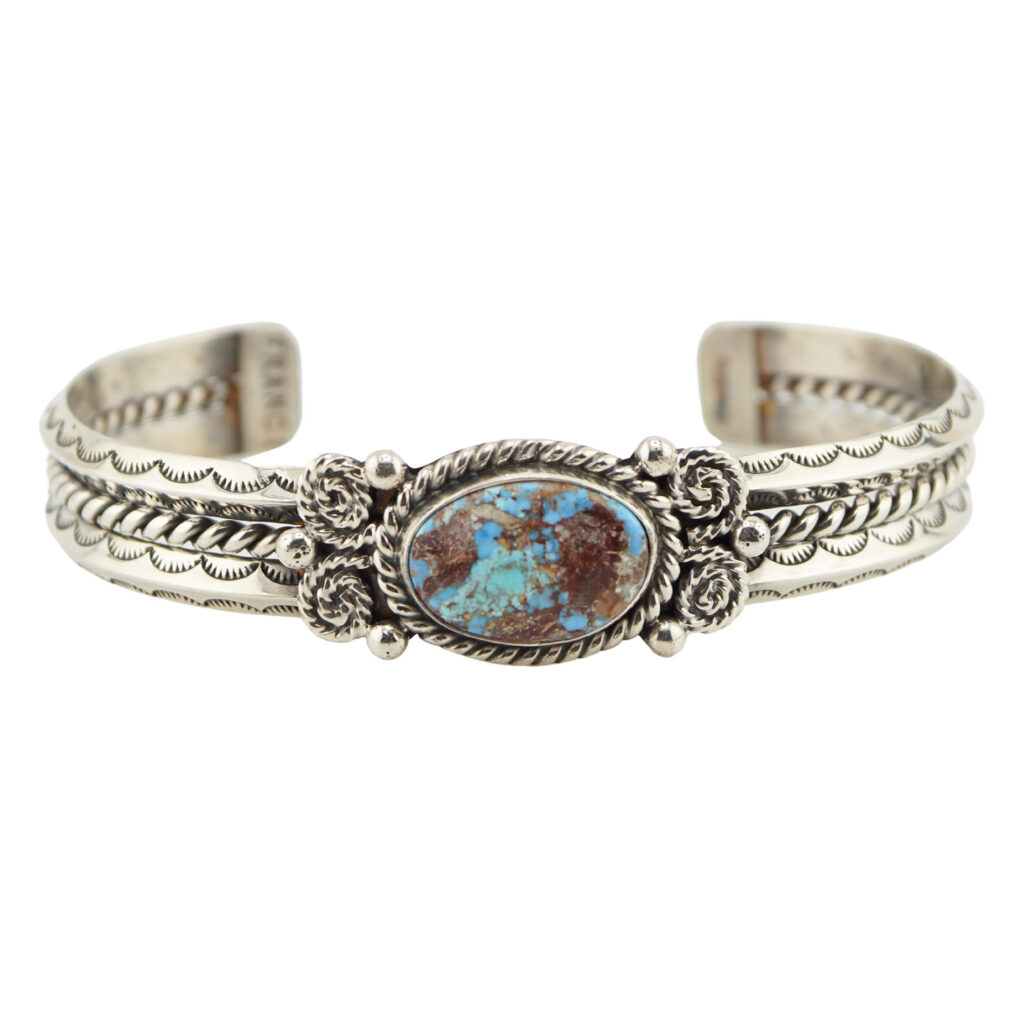
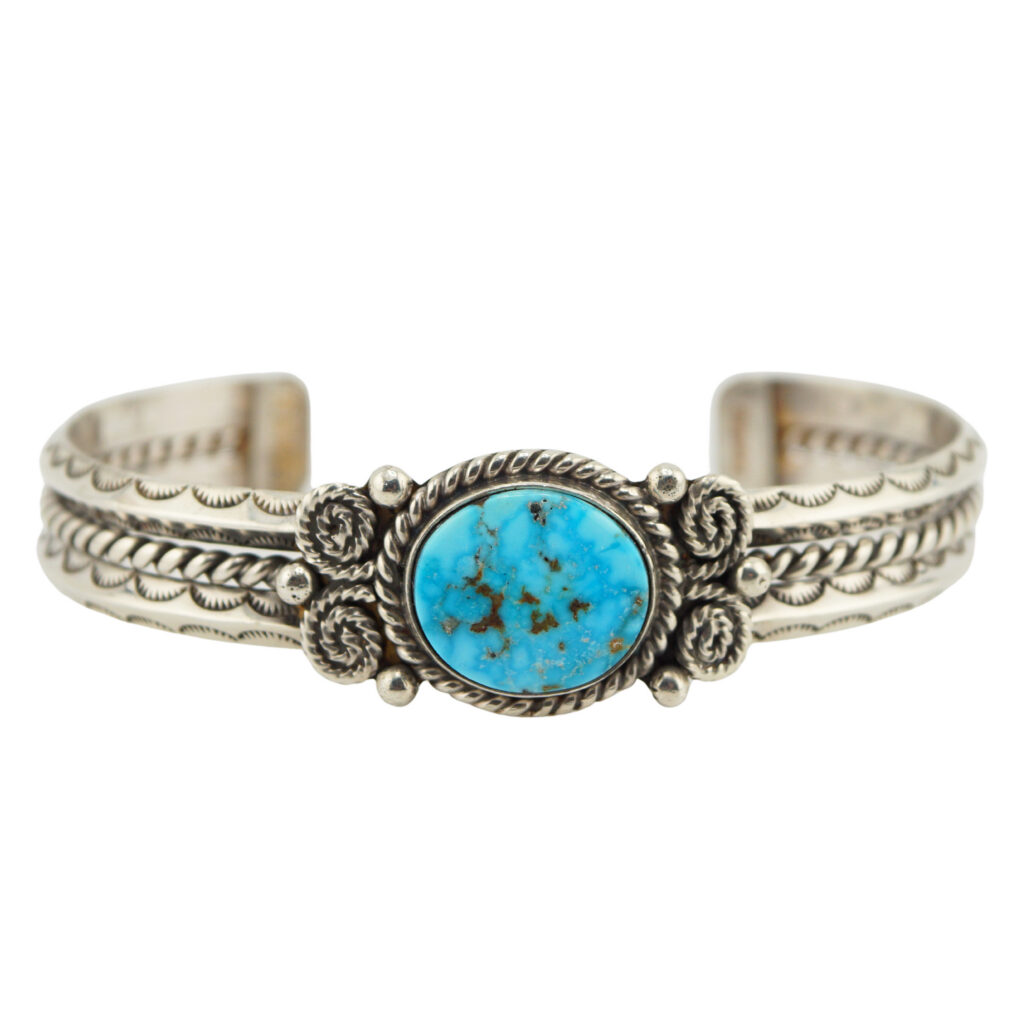
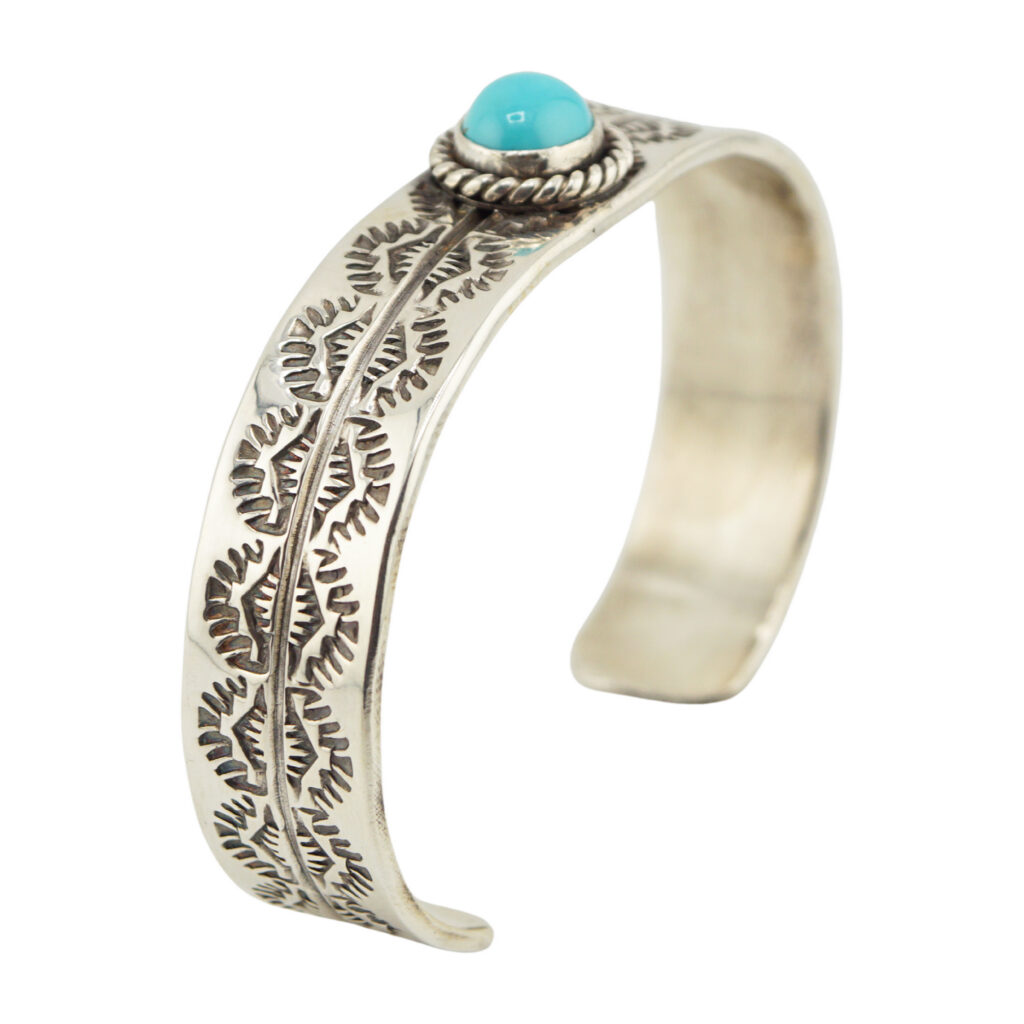
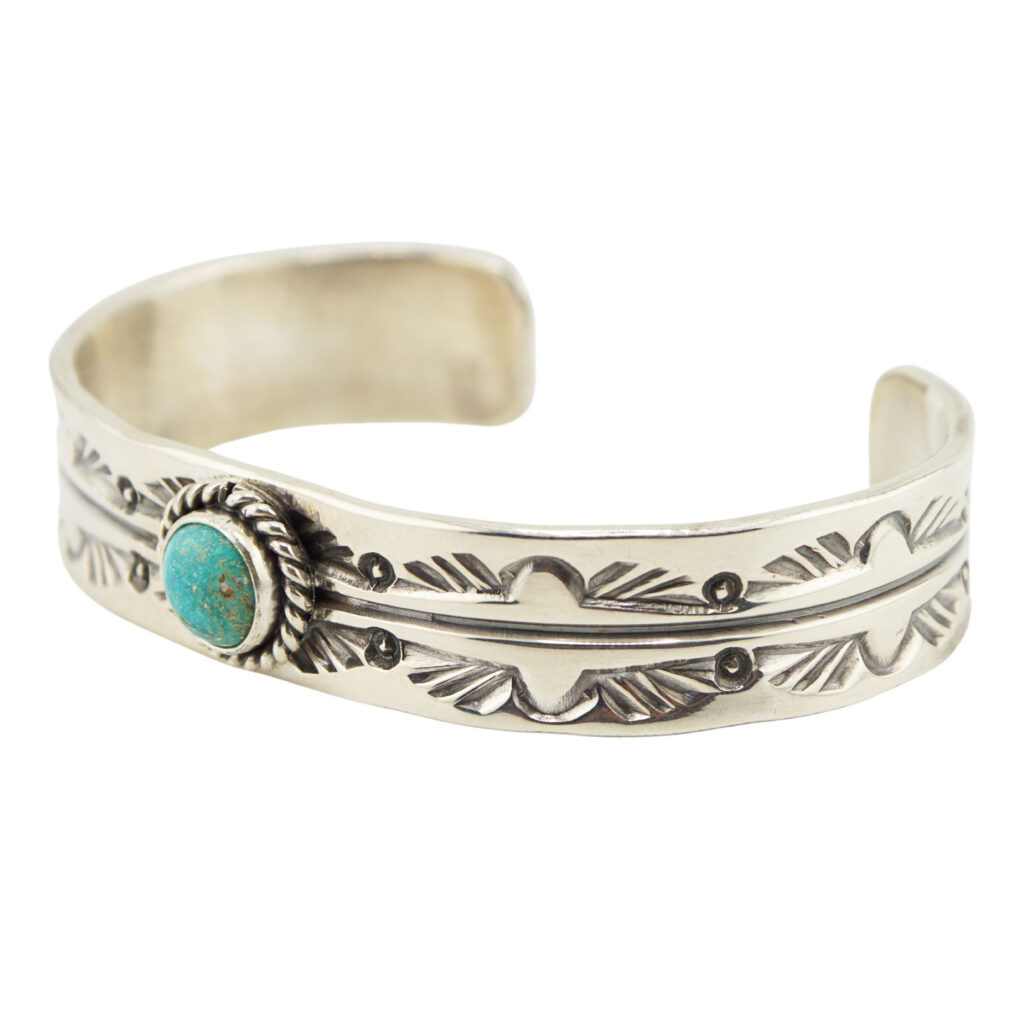
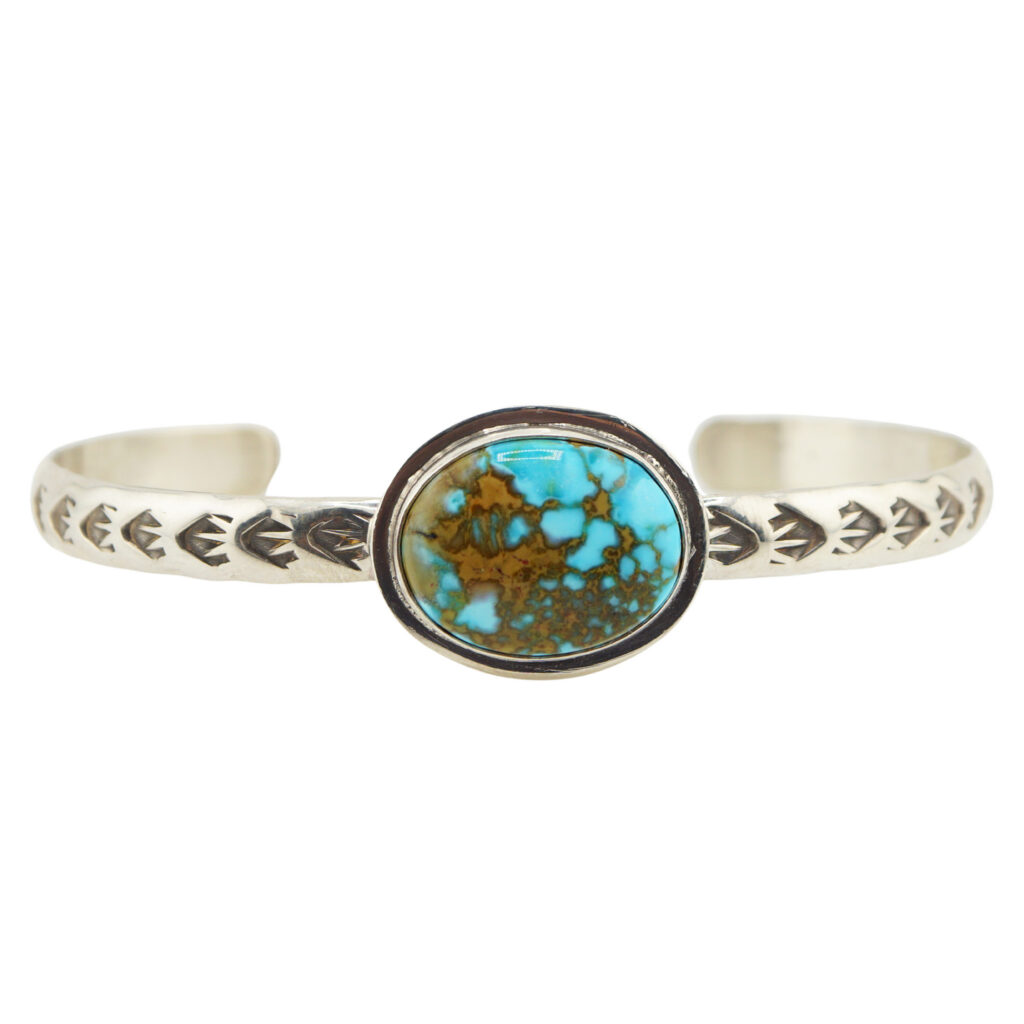
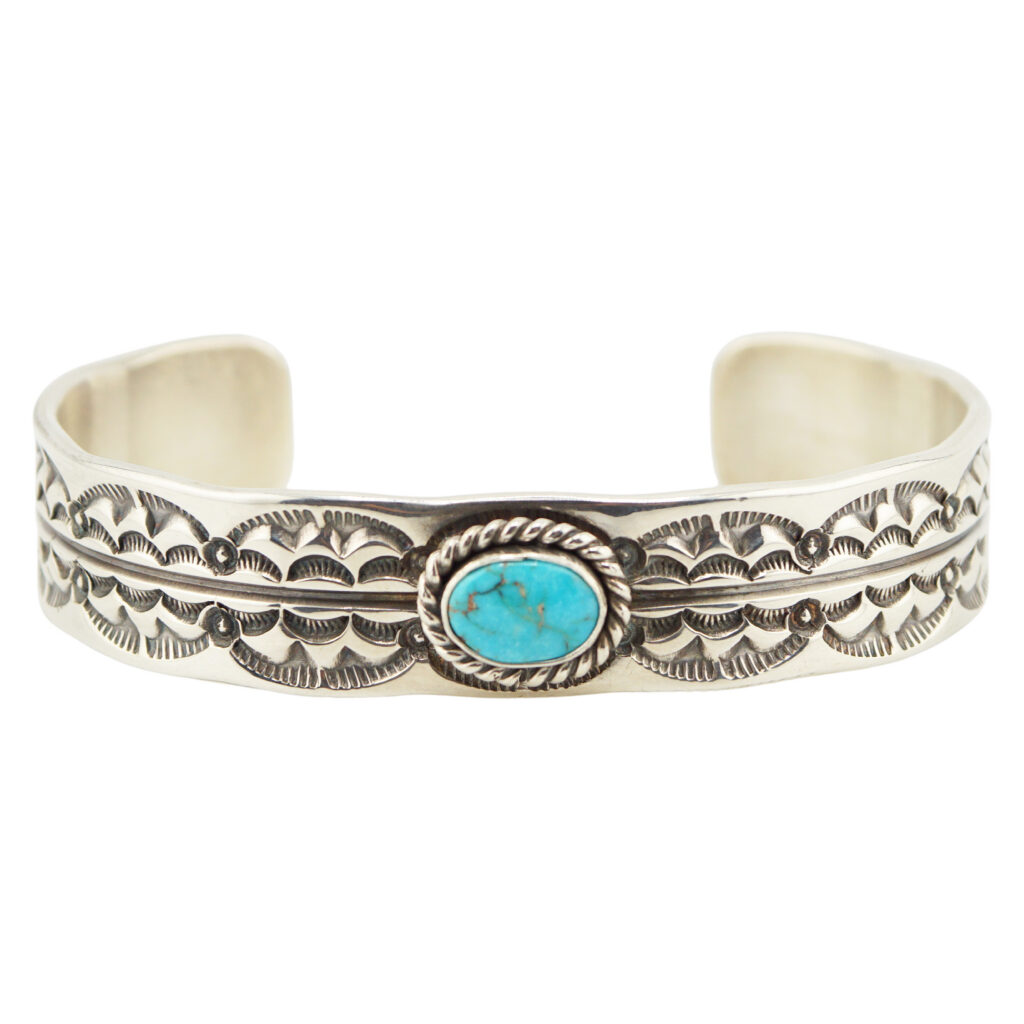
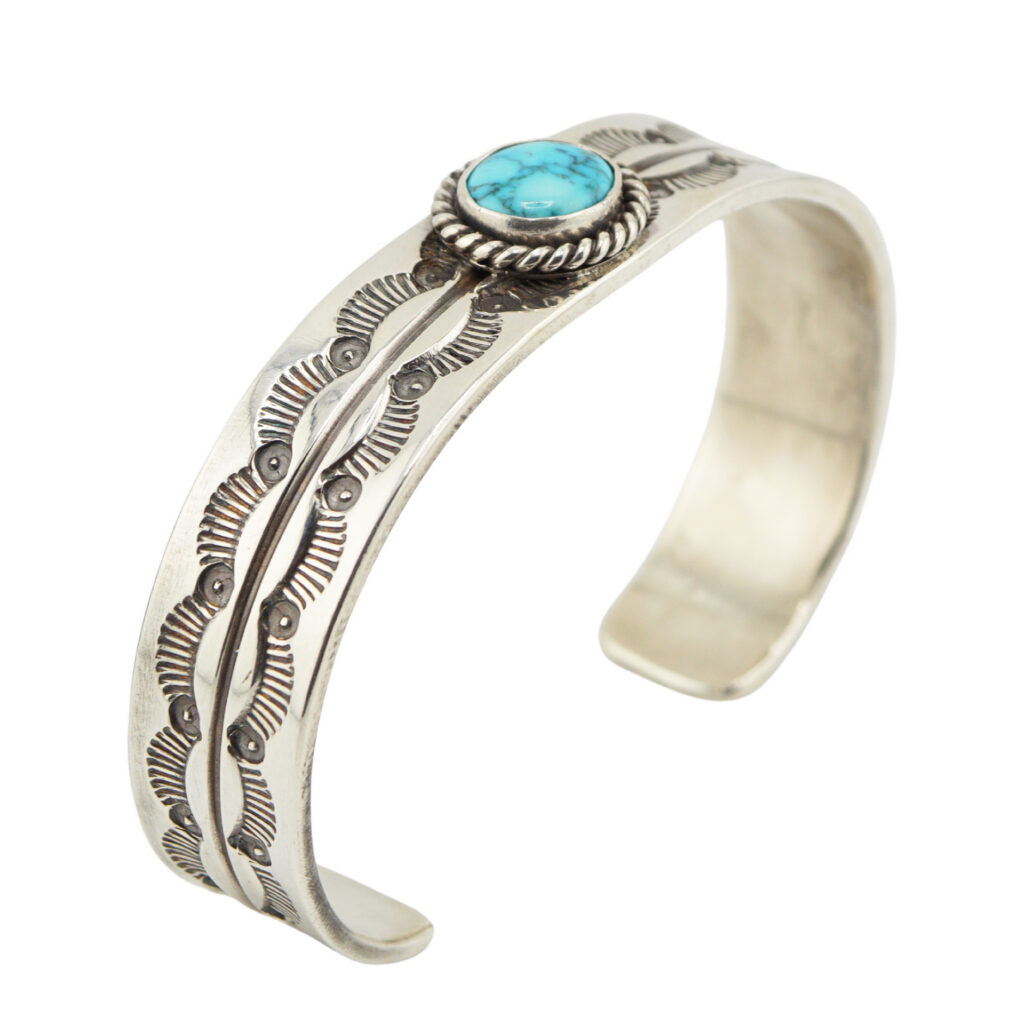
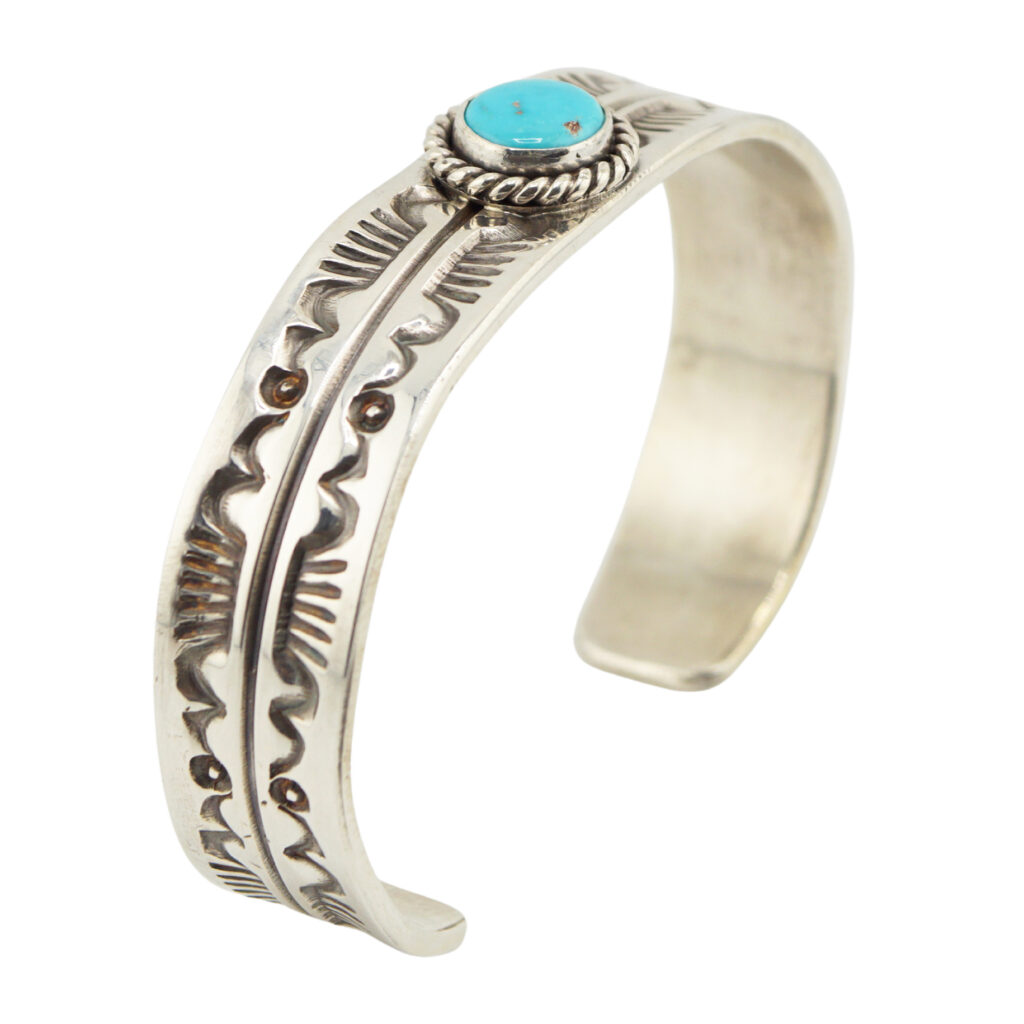
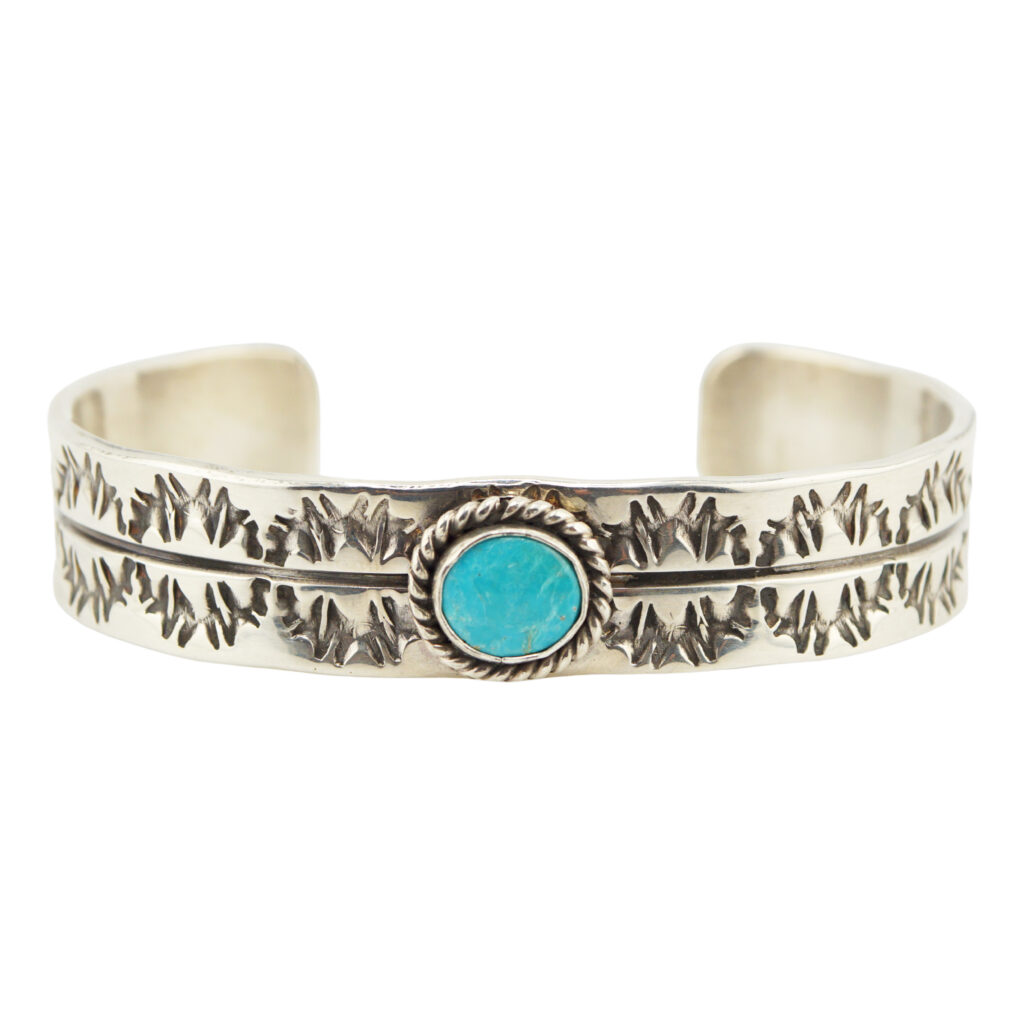
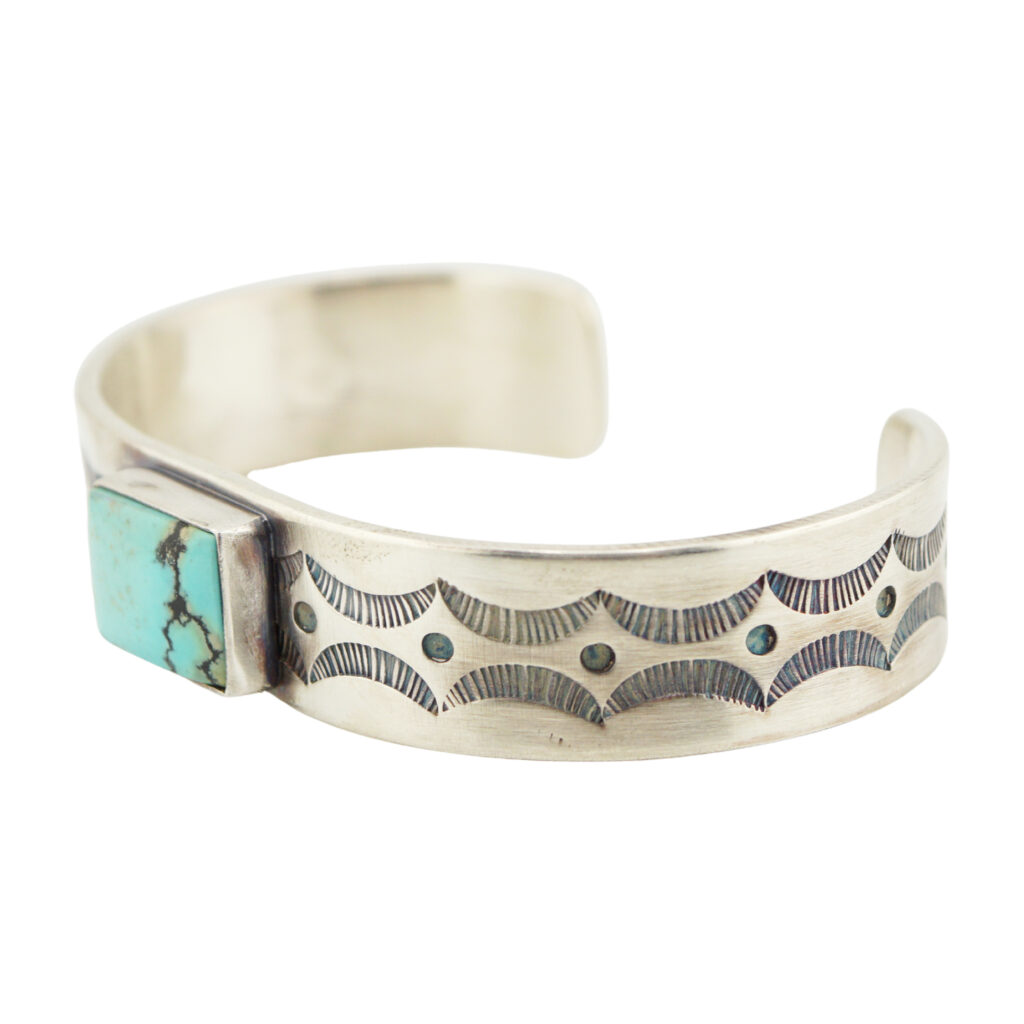
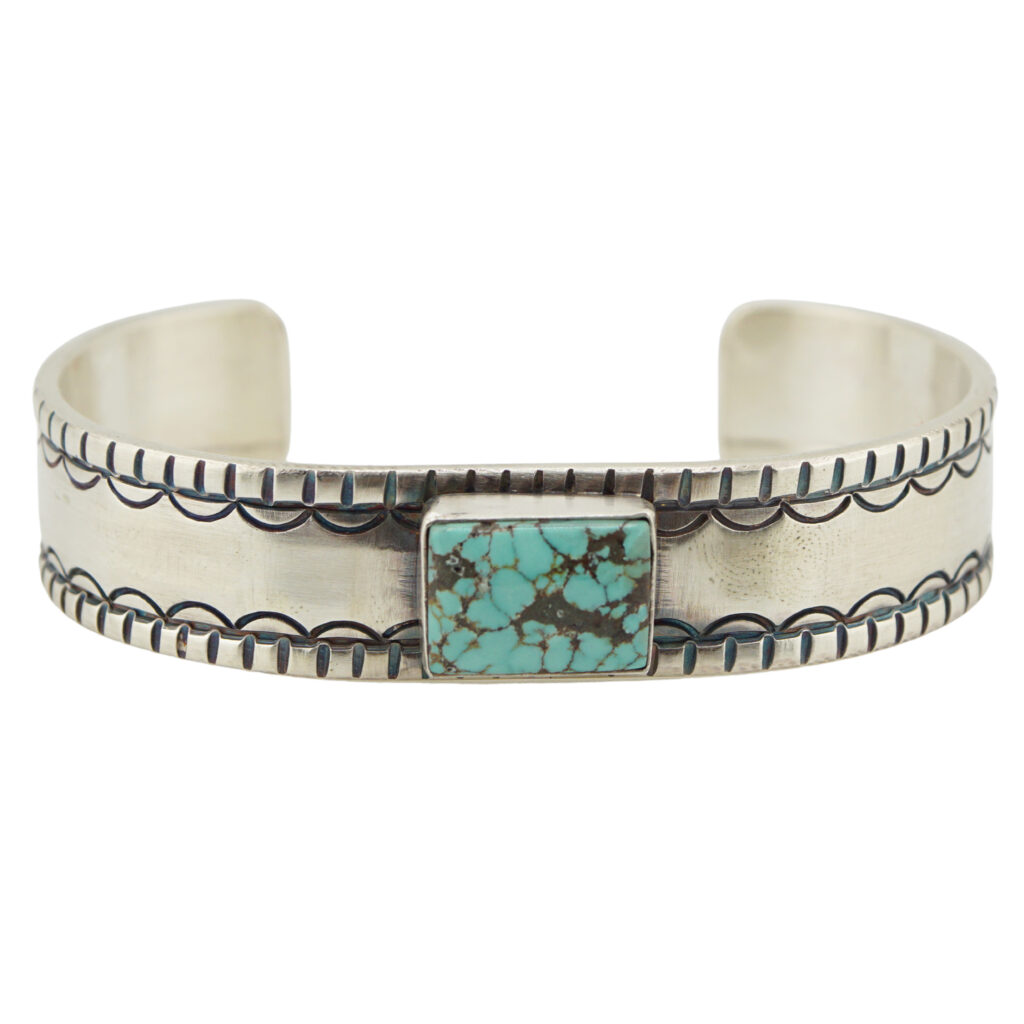
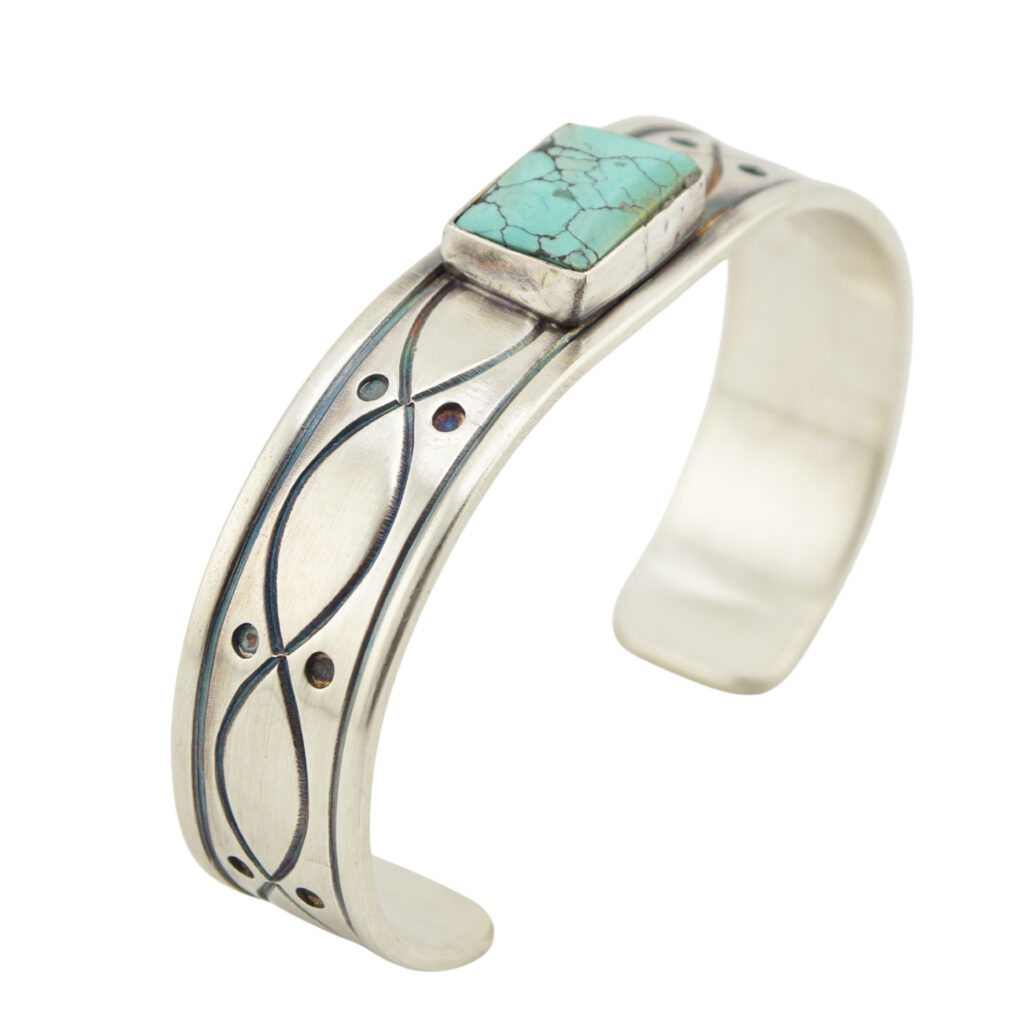
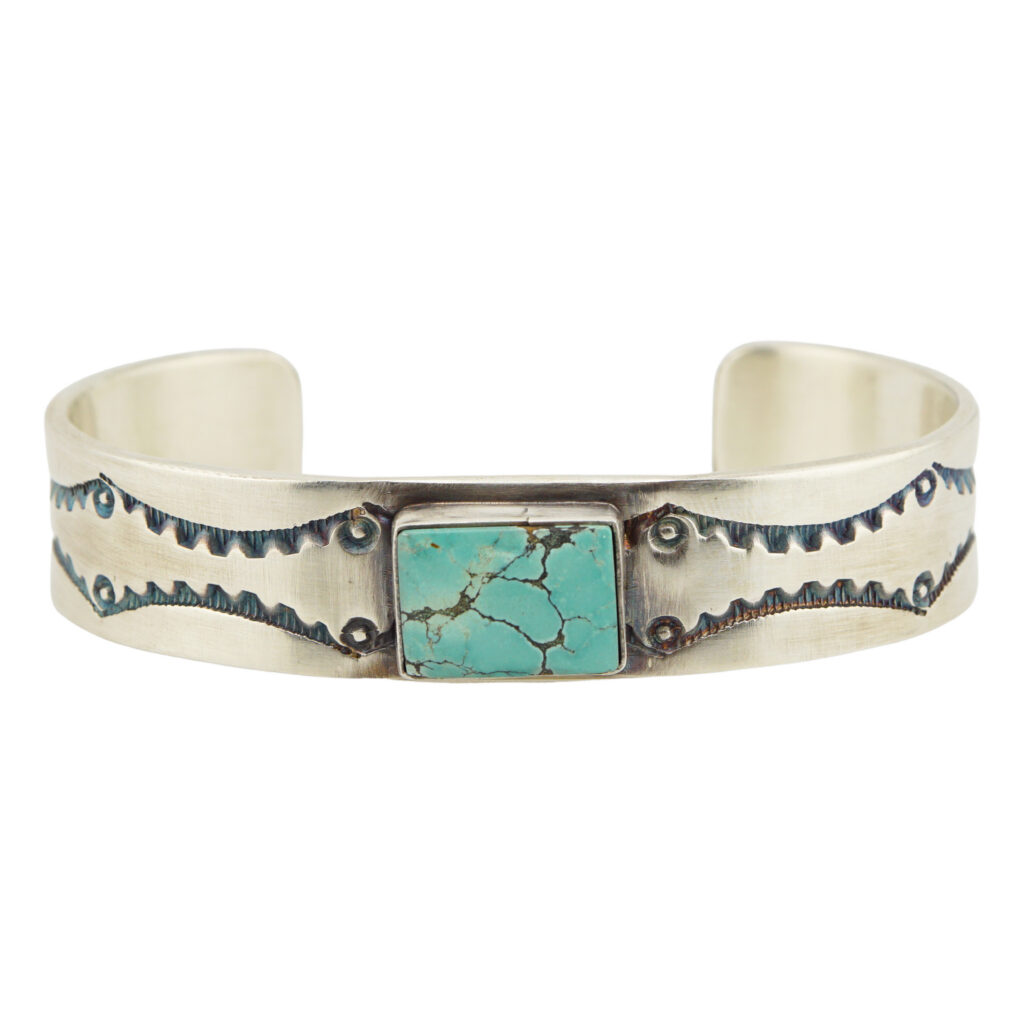
MF: His favorite was traditional stamp work. That was his go-to. But like me, he liked to experiment with other techniques too.
Not every silversmith starts off selling directly to collectors or galleries. Many begin by doing piece work for local dealers—focusing on specific tasks like inlay, buffing, stone setting, or silversmithing. It’s a way to hone your skills while staying connected to the local trading network.
DC: Who were you working for when you first started out?
MF: I did a lot of work for Anasazi Traders and Richardson’s Trading Company. I still do work for Anasazi—they give me the handmade orders, the ones they don’t cast.
DC: What are you working on now?
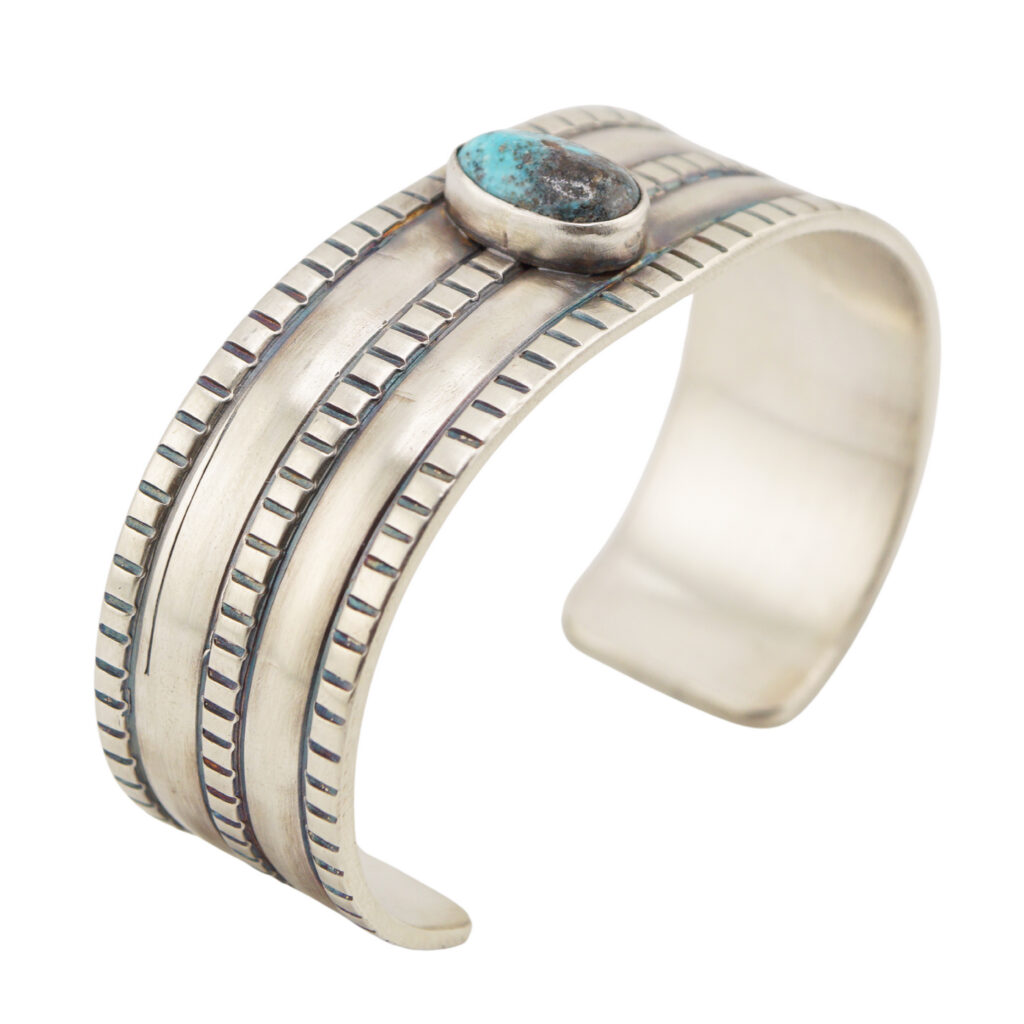
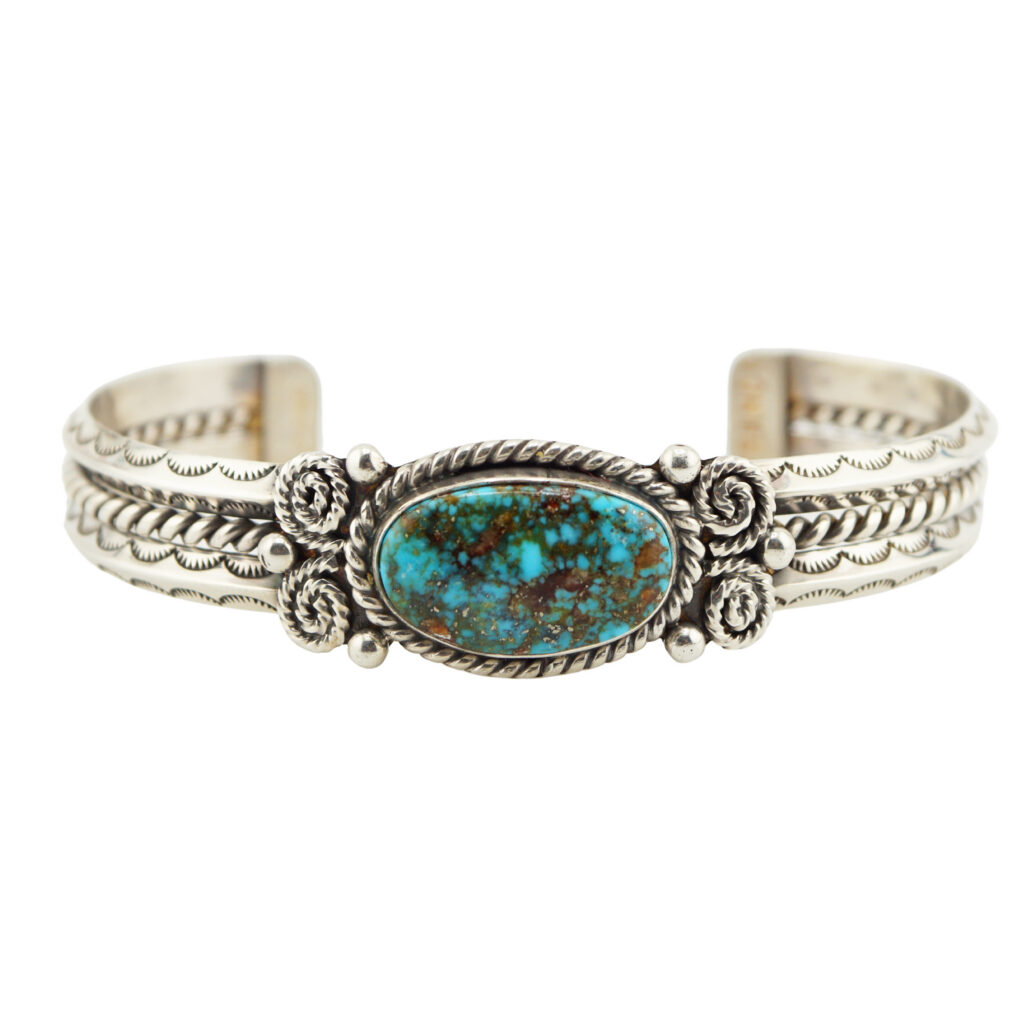
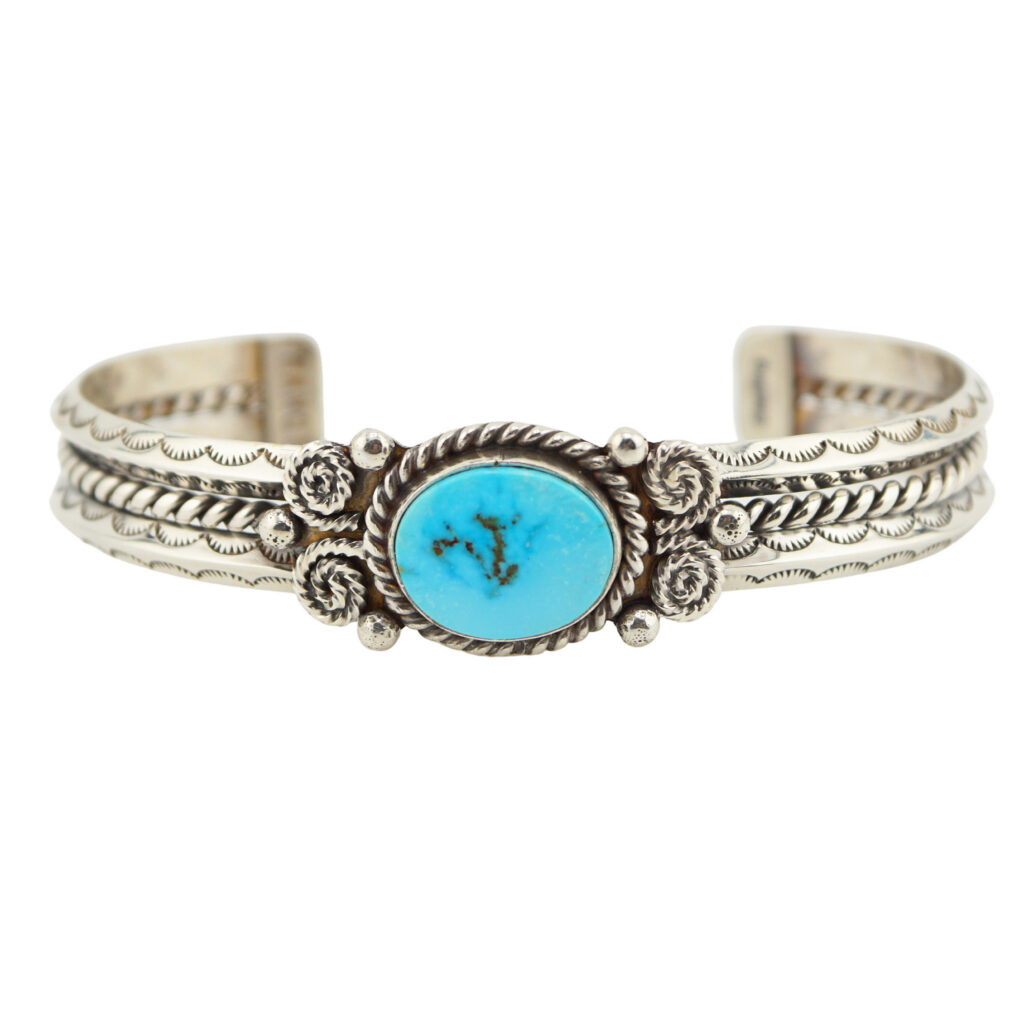
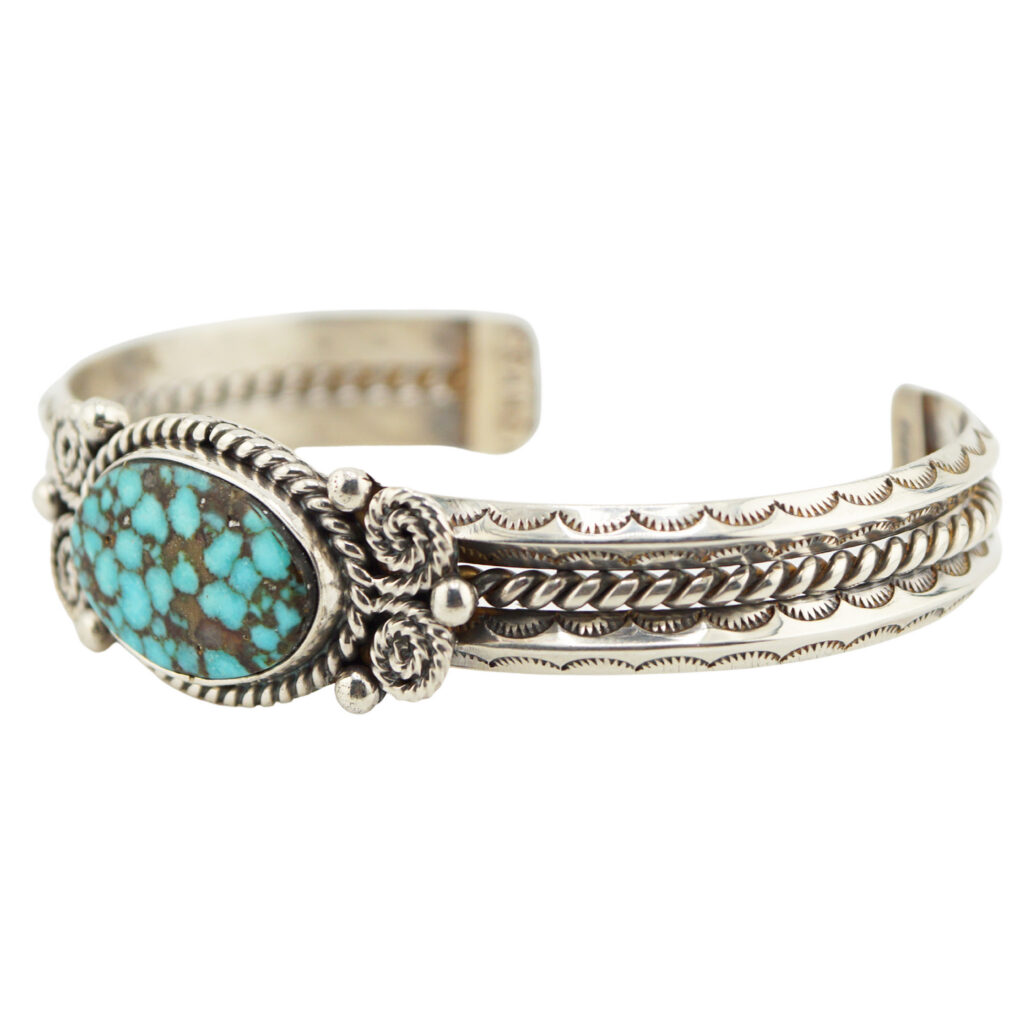
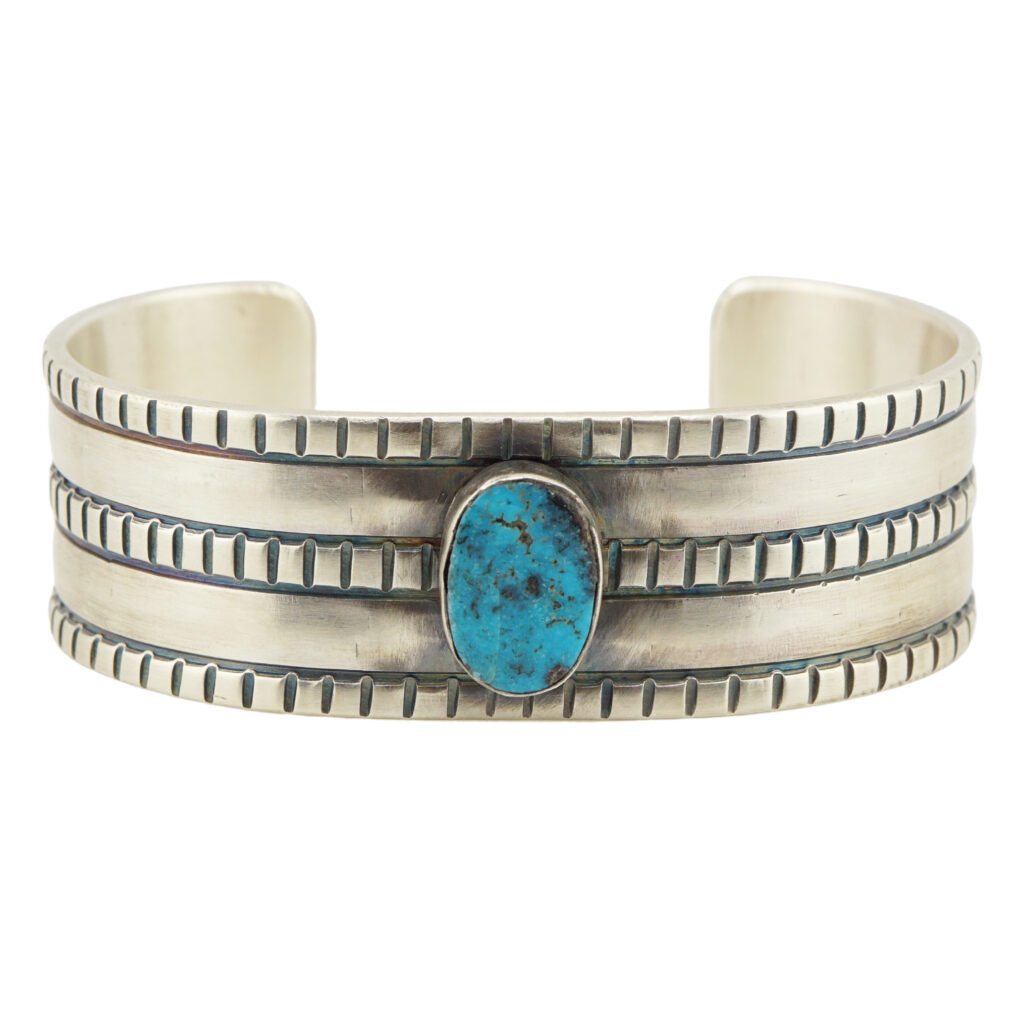
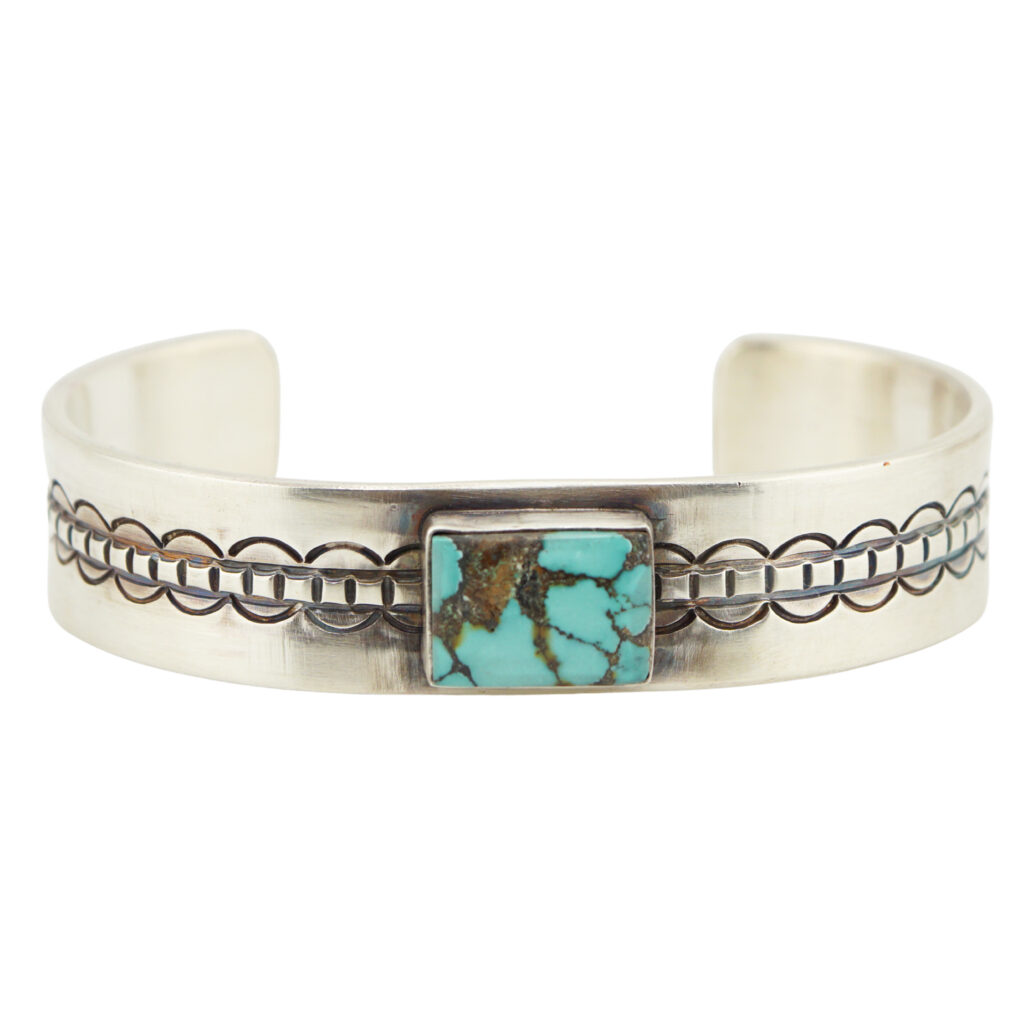
MF: Some heavy wire bracelets. I design them with traditional stamp work, then they’ll get inlaid after I finish the silverwork.
Like fashion, jewelry goes through cycles. Melvin remembers starting out in the late ’90s, when nearly everything had a satin finish to make it look old. Today, the same styles are back—but now with a high-polish shine. Turquoise once dominated the scene; now, you’re just as likely to see agate, spiny oyster, or any number of stones showing up in Navajo silverwork.
DC: What style of work do you prefer?
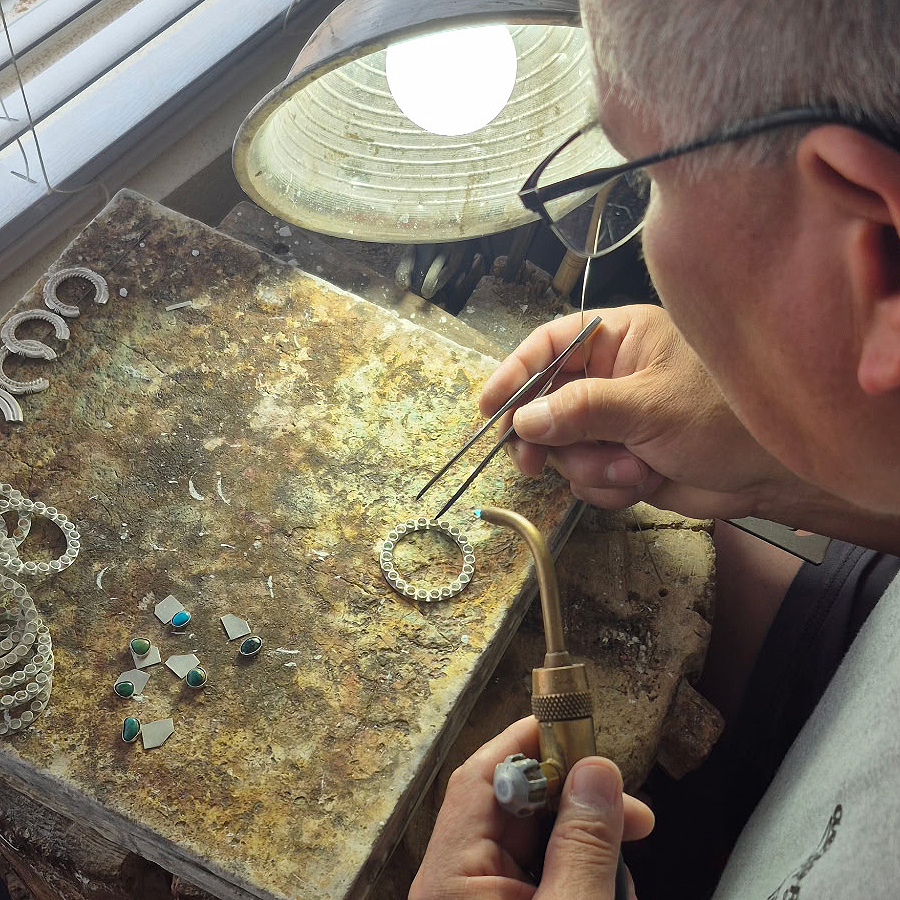
MF: Stamp work. It’s simpler than some of the other handmade techniques—like when you’re sawing, filing, or using the torch.
DC: Have you ever won a blue ribbon?
MF: I’ve won quite a few at the Inter-Tribal Indian Ceremonial. I don’t do many shows outside this area, but I’d like to someday—just to see how my work gets judged in other places.