$290.00
Gallup sits at the crossroads of Native art and culture. Surrounded by the Navajo, Zuni, and Hopi Nations, the town has long been a gathering place for artists, traders, and silversmiths. It is also home to specialty stamp makers whose tools quietly shape generations of Navajo jewelry.
Kingman Turquoise | Sterling Silver
Gallup sits at the crossroads of Native art and culture. Surrounded by the Navajo, Zuni, and Hopi Nations, the town has long been a gathering place for artists, traders, and silversmiths. It is also home to specialty stamp makers whose tools quietly shape generations of Navajo jewelry.
Award-winning Navajo silversmith Lyndon Tsosie operates one of those stamp shops, creating detailed steel stamps used by many contemporary silversmiths. Artists guard their favorite stamps closely, often building entire designs around a single pattern.
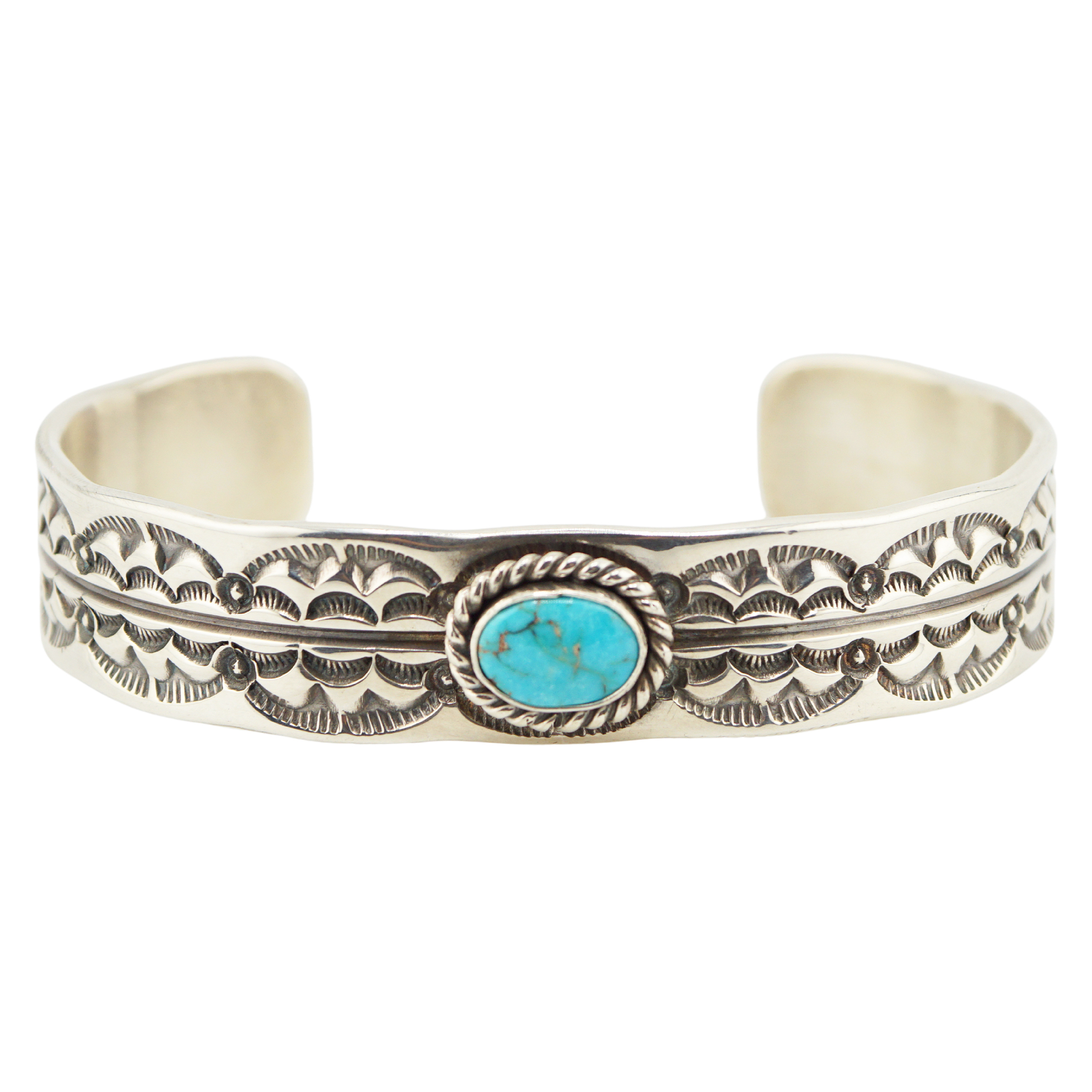
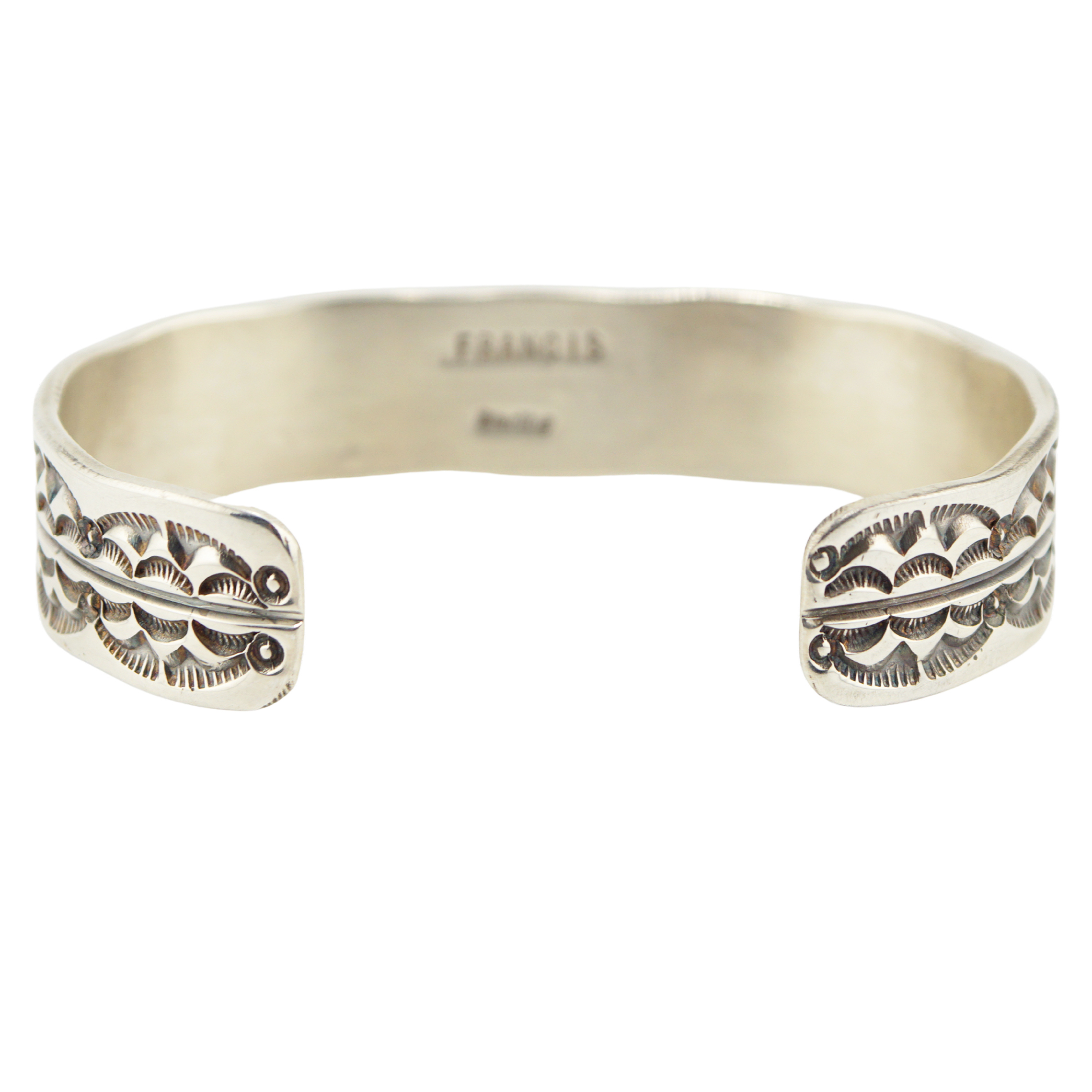
This cuff by Navajo silversmith Melvin Francis showcases one of those classic designs beautifully.
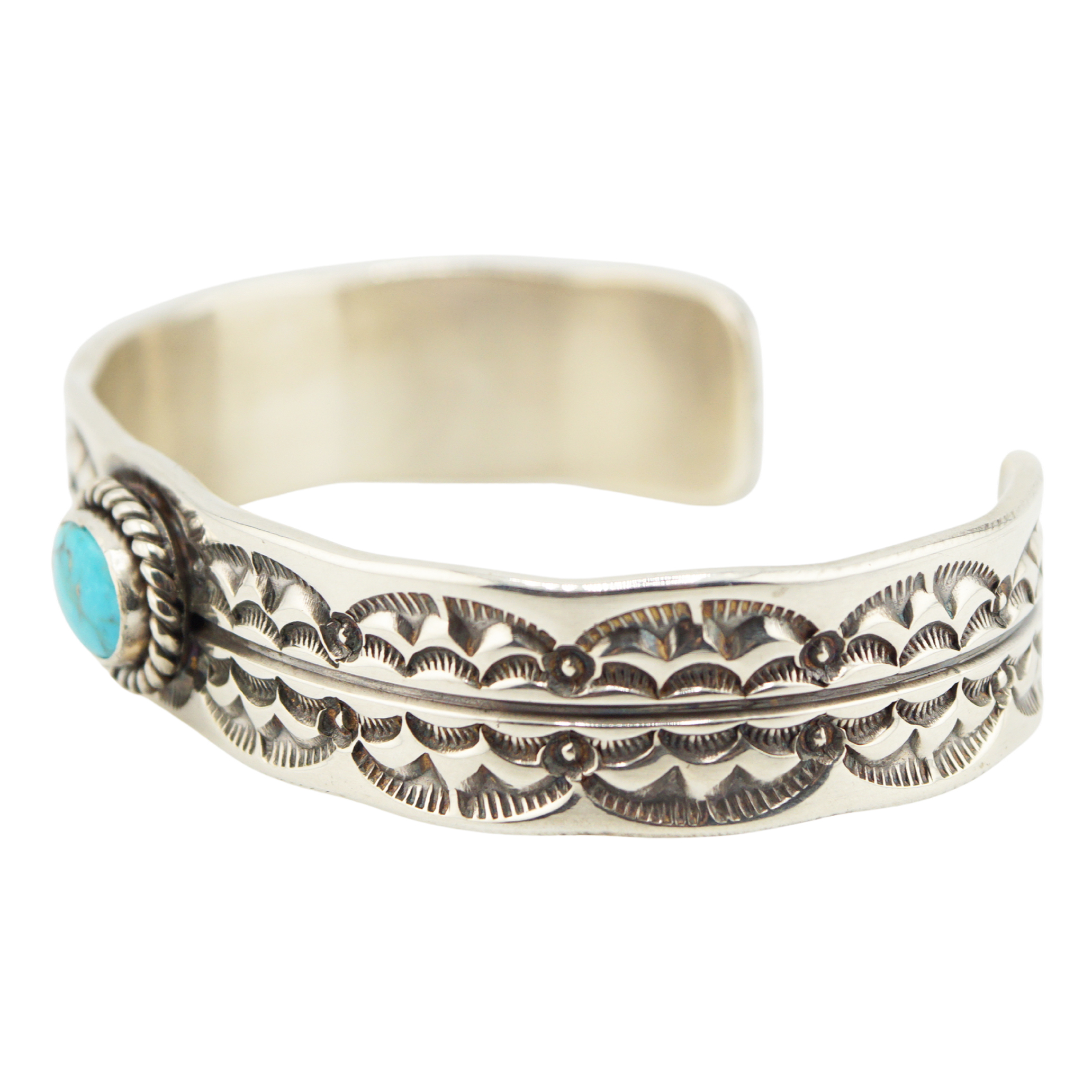
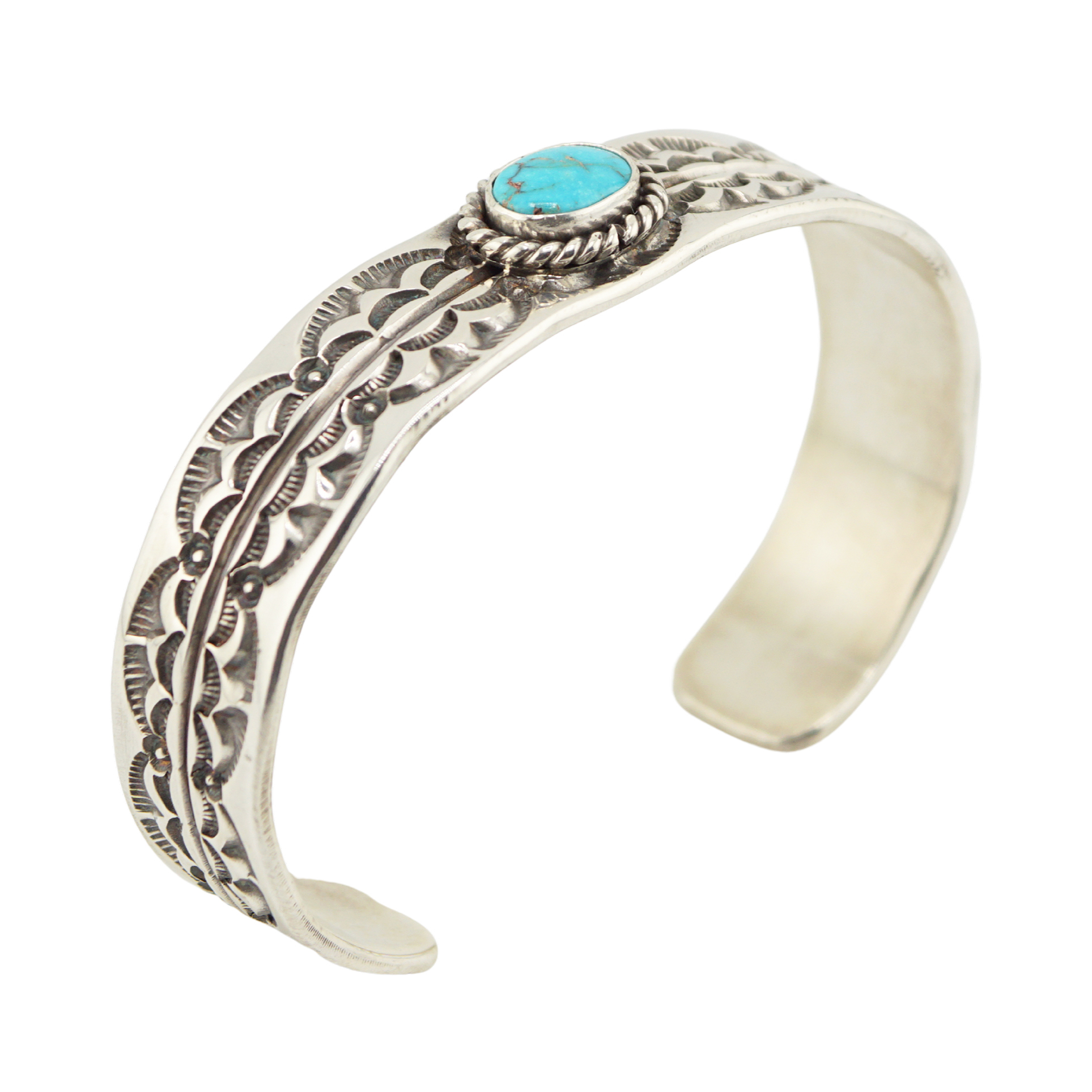
The bracelet is crafted from heavy gauge sterling silver and features a bold repeating horizon-style stamp pattern running from end to end. Deeply struck and perfectly balanced, the design creates movement across the cuff while highlighting the precision of Melvin’s handwork. A separating center line divides the stamp work, adding structure and symmetry to the piece.
At the center sits a small oval cut of rich blue Kingman Turquoise, framed with traditional twisted wire. The bright turquoise adds just enough color while allowing the silverwork itself to remain the focal point.
Finished with a clean mirror polish, this bracelet is a timeless example of traditional Navajo stamp work—comfortable enough for everyday wear while carrying the depth and craftsmanship collectors look for.
Bracelet Width – 5/8″
Bracelet Opening – 1 1/4″
Wrist Size – 7 1/8″
Weight – 1.325 ozt
1 in stock
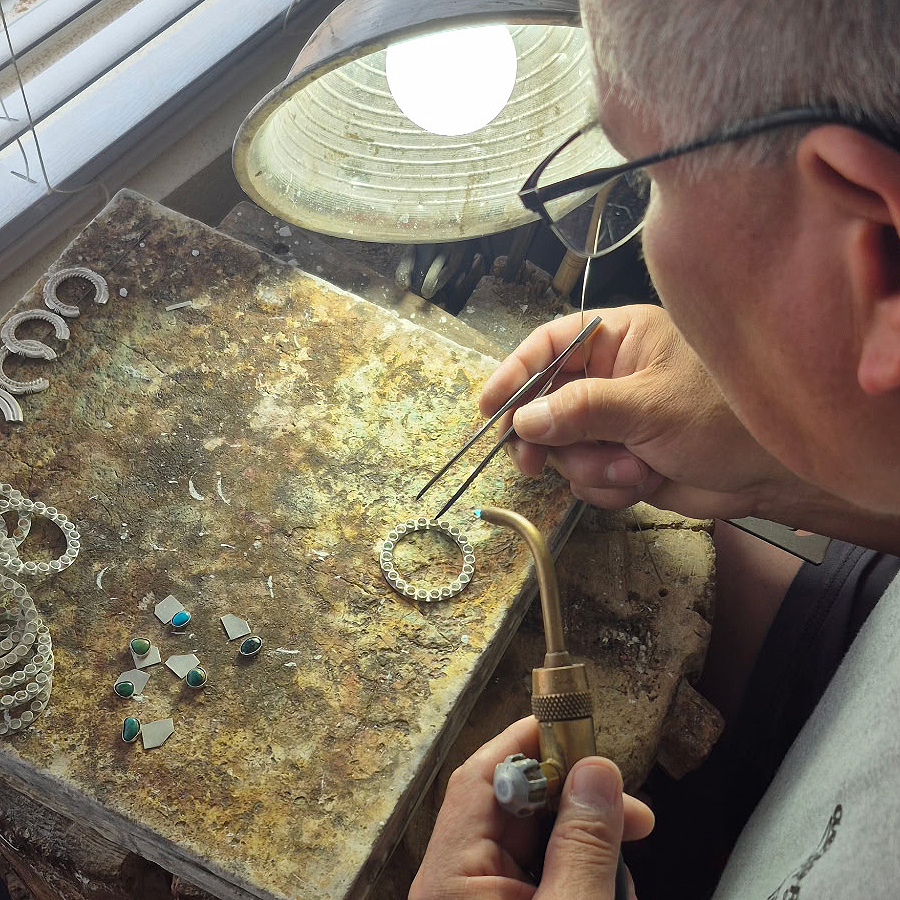
It’s a familiar story in Native American jewelry: one generation passes the craft to the next. That’s how Navajo silversmith Melvin Francis got his start. From the time he was eight, Melvin sat at his father Ted Francis’s workbench—watching, helping, and slowly learning the skills that would shape his life. Today, Melvin still uses many of the same tools his late father once held in his hands.