
$290.00
Collectors of early Navajo jewelry often notice a distinct characteristic in vintage turquoise pieces — many feature clean blue stones with very little or no matrix. During the Fred Harvey era, traders discovered that tourists were drawn to smooth robin’s egg blue
Sterling Silver | Navajo Handmade
Collectors of early Navajo jewelry often notice a distinct characteristic in vintage turquoise pieces — many feature clean blue stones with very little or no matrix. During the Fred Harvey era, traders discovered that tourists were drawn to smooth robin’s egg blue turquoise and often avoided stones with heavy webbing or dark inclusions. That classic Southwestern look still carries timeless appeal today.
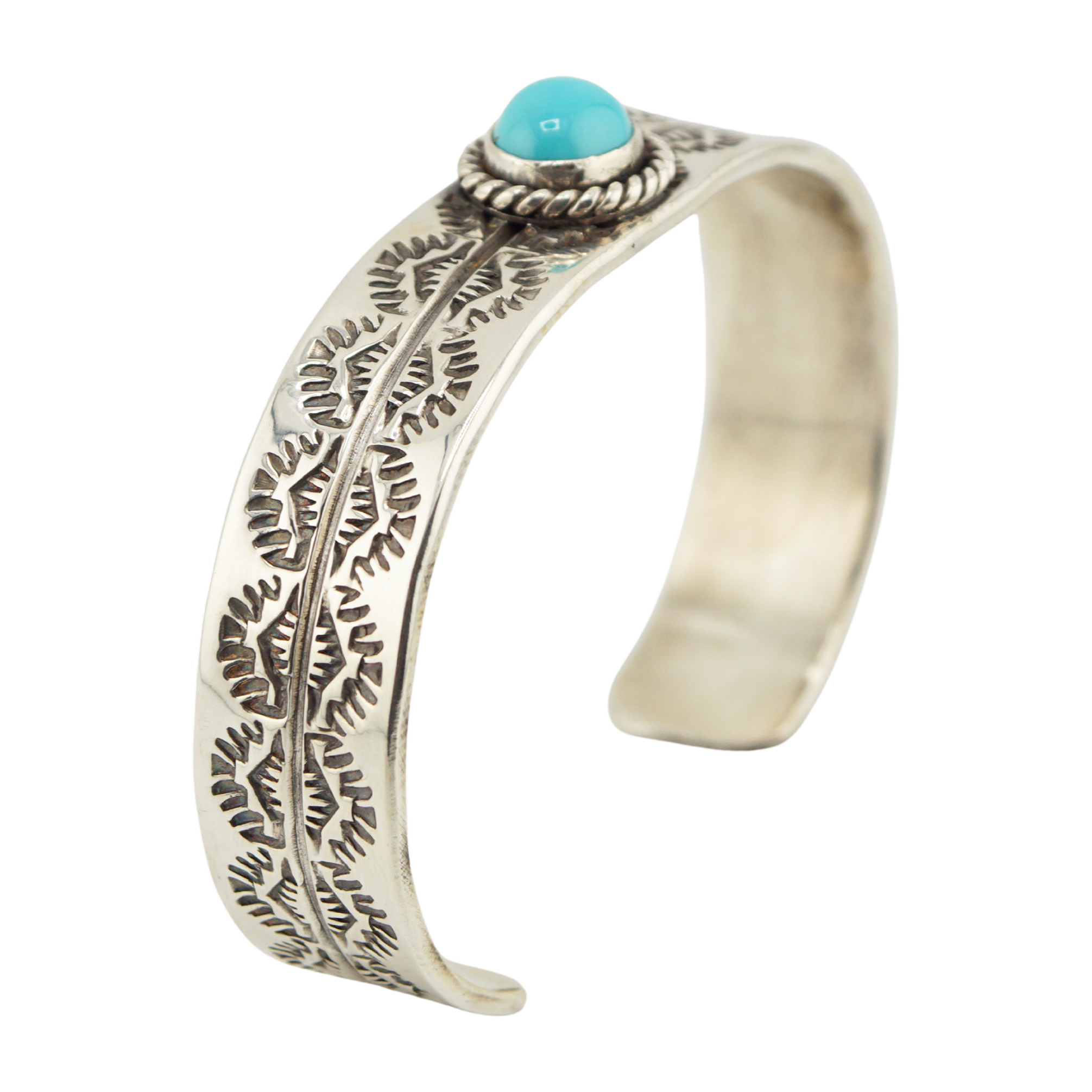
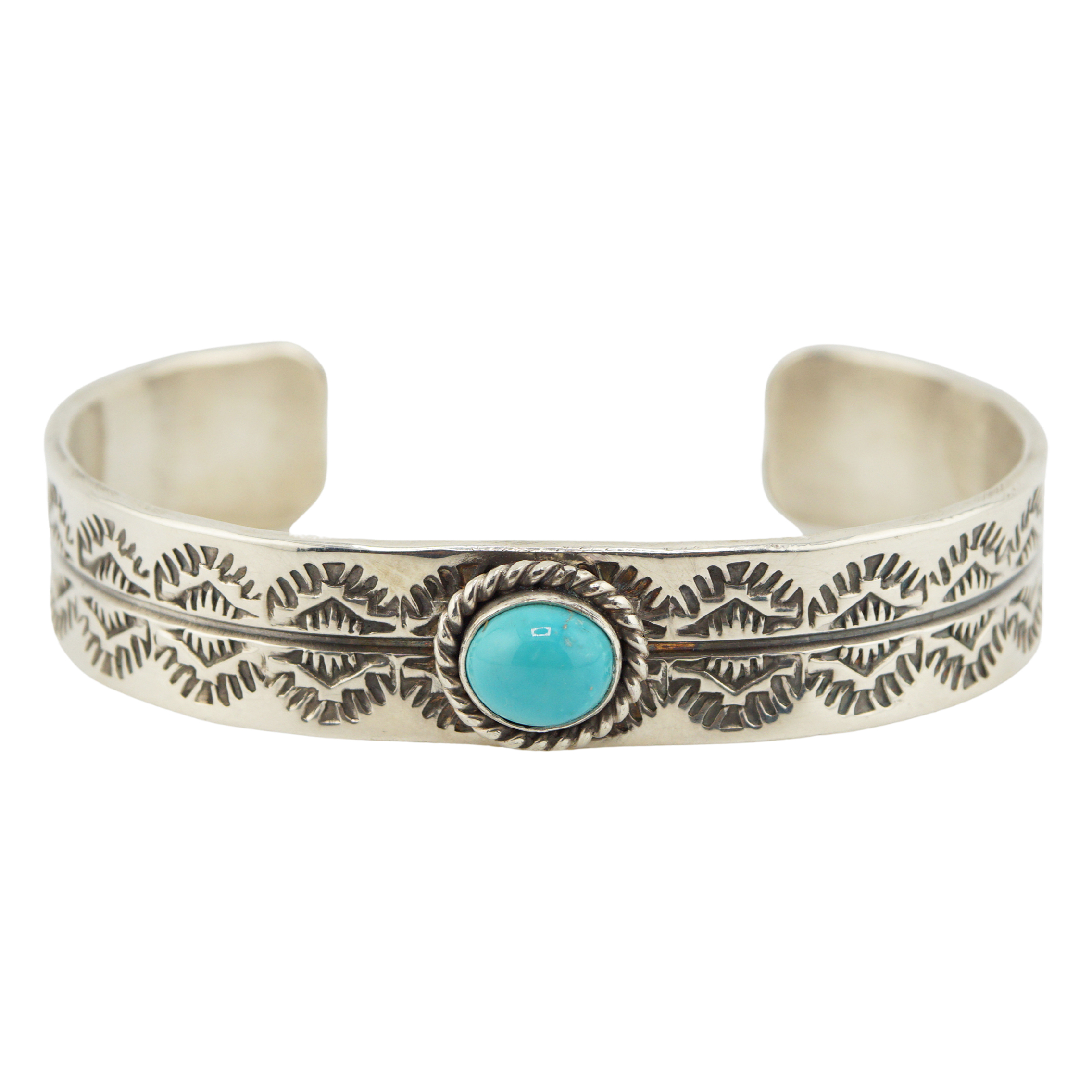
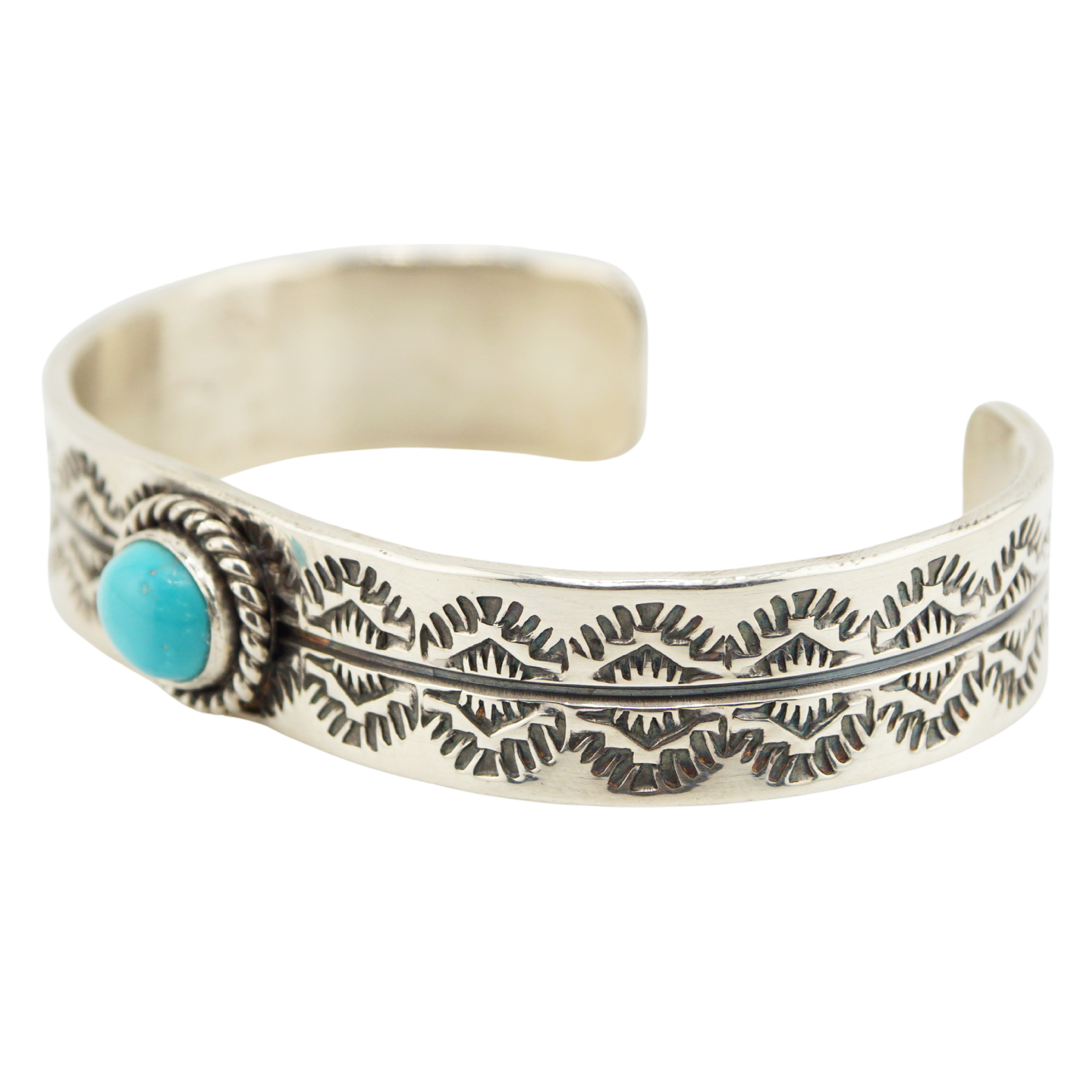
Navajo silversmith Melvin Francis honors that tradition with this beautifully stamped sterling silver cuff. At the center sits a high-domed Arizona turquoise stone displaying the vivid clear blue color collectors have admired for generations. The polished cabochon rises proudly from a twisted rope bezel, creating a strong focal point against the bright mirror-finished silver.
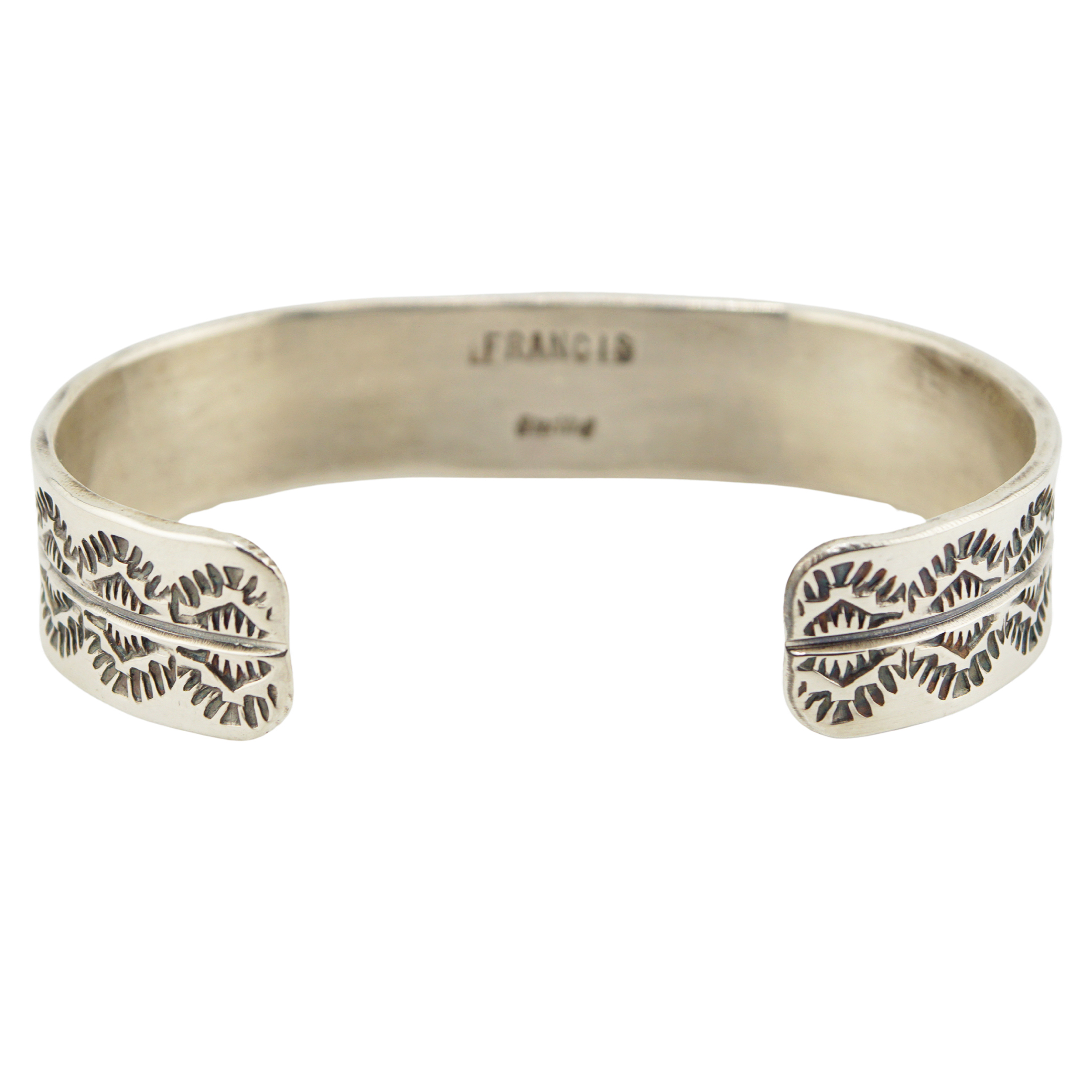
Surrounding the stone is deep hand-stamped work flowing across the cuff in repeating traditional patterns. The detailed stamp work adds texture and movement while keeping the bracelet balanced and wearable. Melvin’s craftsmanship blends vintage Navajo influence with a clean contemporary finish, making this piece equally at home in a modern collection or alongside older Southwestern jewelry.
The bracelet has a versatile width that layers well with other silver cuffs yet still makes a statement worn alone. Its crisp lines, bright finish, and classic blue turquoise capture the enduring spirit of traditional Navajo silverwork.
Bracelet Width – 9/16″
Bracelet Opening – 1 1/4″
Wrist Size – 7 1/8″
Weight – 1.35 ozt
1 in stock
It’s a familiar story in Native American jewelry: one generation passes the craft to the next. That’s how Navajo silversmith Melvin Francis got his start. From the time he was eight, Melvin sat at his father Ted Francis’s workbench—watching, helping, and slowly learning the skills that would shape his life. Today, Melvin still uses many of the same tools his late father once held in his hands.