$210.00
As silver prices continue to rise, Navajo jewelry has slowly begun to evolve. Traditional Navajo work has long been known for heavy silver and large turquoise stones, but the increasing cost of materials has changed both the styles being made and the path for young artists entering the craft.
Turquoise Mountain Turquoise | Sterling Silver
As silver prices continue to rise, Navajo jewelry has slowly begun to evolve. Traditional Navajo work has long been known for heavy silver and large turquoise stones, but the increasing cost of materials has changed both the styles being made and the path for young artists entering the craft.
Twenty-five years ago, a young silversmith could walk into Thunderbird Jewelry Supply or Indian Jewelry Supply in Gallup and purchase enough silver and a stone to begin making jewelry for just a few dollars. Today, the cost of silver alone has transformed that process, making it much harder for new artists to get started. Yet even as materials change, the tradition and artistry remain strong in the hands of experienced makers like Navajo silversmith Melvin Francis.
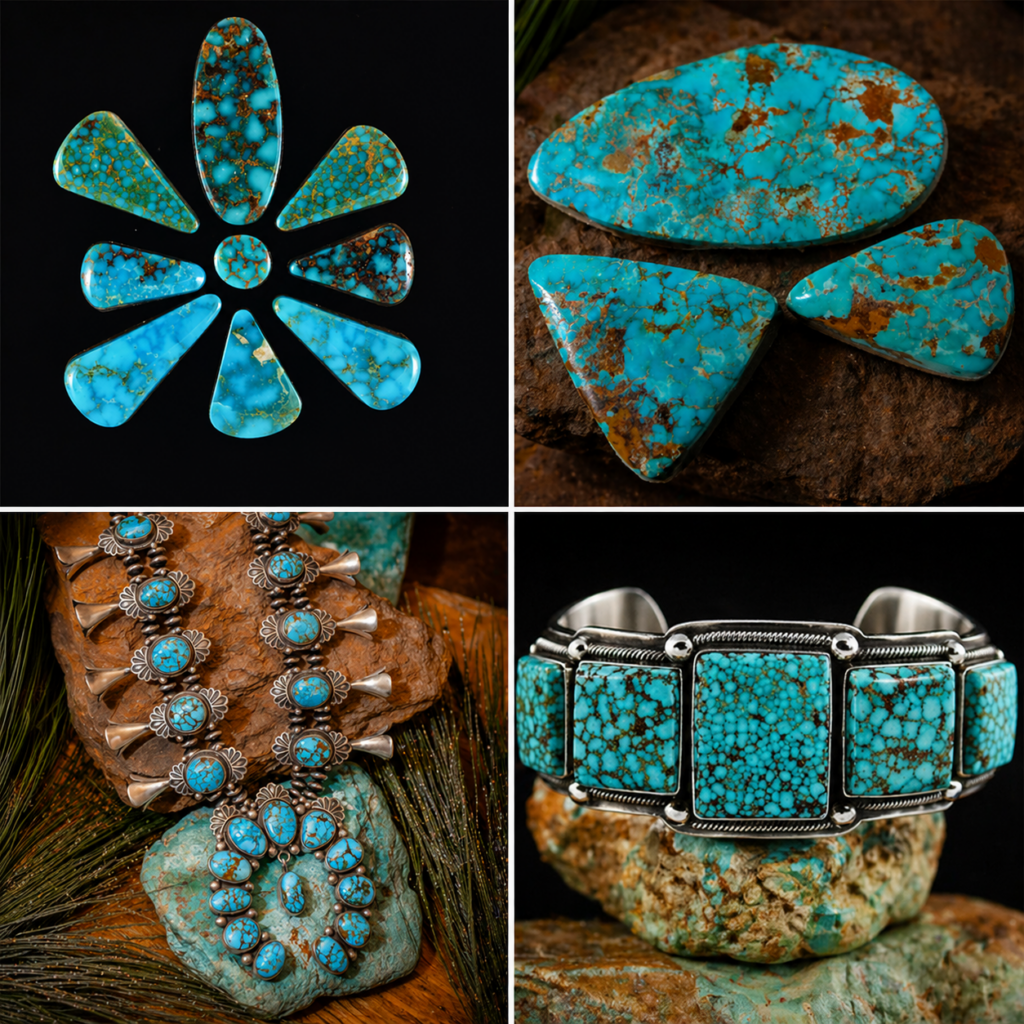
This bracelet features a narrow sterling silver cuff stamped end to end with a repeating traditional pattern that gives the piece texture while keeping it lightweight and comfortable for everyday wear. At the center sits a striking round cut of Turquoise Mountain turquoise from the Kingman Mining District. The stone is filled with rich blue color and heavy natural matrix, creating a beautiful contrast against the bright silver setting.
The clean bezel and slim profile make this bracelet easy to stack, while the vivid turquoise gives it the unmistakable character of classic Navajo jewelry.
Bracelet Width – 7/8″
Bracelet Opening – 1 1/4″
Wrist Size – 6 7/8″
Weight – .54 ozt
1 in stock
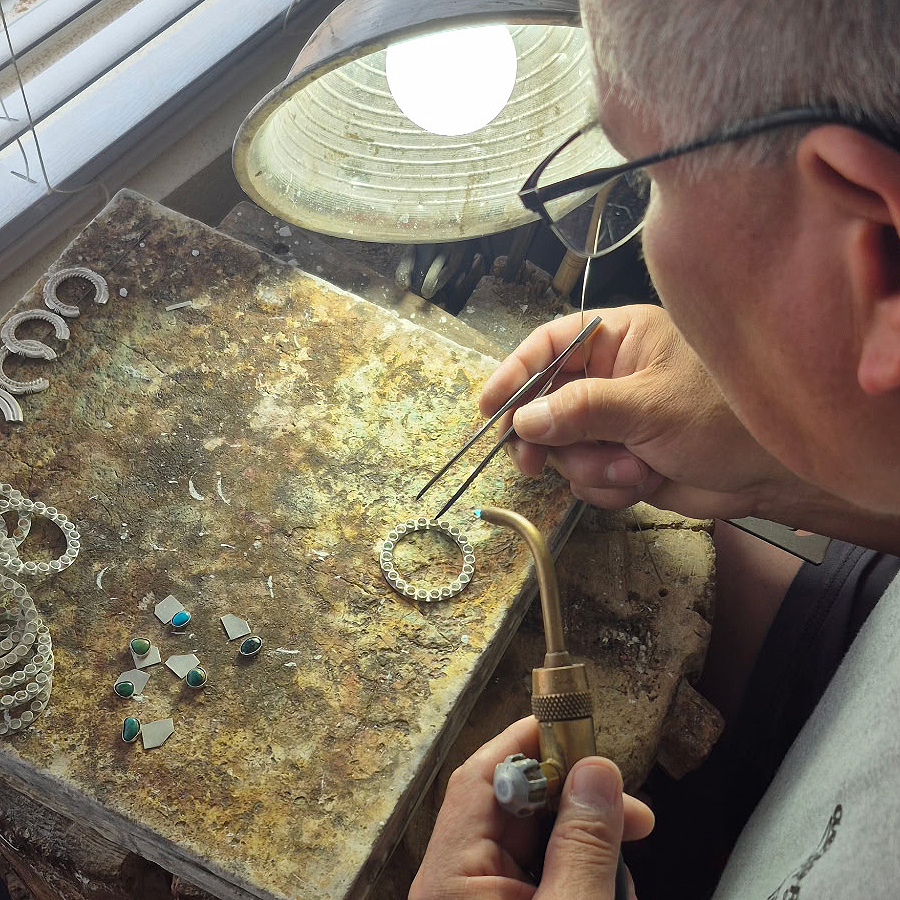
It’s a familiar story in Native American jewelry: one generation passes the craft to the next. That’s how Navajo silversmith Melvin Francis got his start. From the time he was eight, Melvin sat at his father Ted Francis’s workbench—watching, helping, and slowly learning the skills that would shape his life. Today, Melvin still uses many of the same tools his late father once held in his hands.